Category Archives: Financial

Articles relating to money and savings

America Under Fire – Inside and Out – Part II

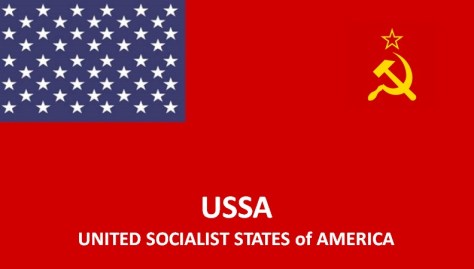
USSA Flag

If you haven’t read Part I of this article, please read it first. 

America Under Fire – Inside and Out – Part I

Part I discusses just a few of the numerous things accomplished under the Biden administration which has had a very negative impact on the U.S. 

Since Part I was posted (six days ago) something of import came out in the news.  Here’s a one sentence summary of it for you.

“As part of the U.S. Federal Housing Finance Agency’s push for more affordable housing, home buyers with good credit scores will be forced to pay additional fees on their mortgages. Starting on May 1 …”  (This should have yet another negative impact on real estate.)

To read the full article, click the following link.

Biden administration hiking mortgage fees for Americans with good credit

Doesn’t that just fry your bacon!?  So, if you buy a home you get ‘fined’ for being a good steward of your money and saving.  As for the slacker down the road who has been living off the dole, spending like crazy (80” TVs, etc.), and who has been referring to you as “the man”, he gets a boost when buying a home!  Fair, right?

These equity ‘enhancements’, for example, are killing our economy.  This is just the latest brainstorm the administration wants to right all wrongs.  (Note: This is not a bill that congress must sign off, it is an executive order.)  These changes are happening with breathtaking speed and frequency – and they add up.  They are things to worry the average person.  However, we must worry about things like the ‘Amy Nelson’ story happening to us also! 

The Amy Nelson Story – Her family’s life was destroyed for years along with their property and ability to support themselves – for years!  This is the sort of thing that can happen to anyone – yes, even me!  Imagine not being able to make your house payment because you no longer have any money!?  Frightening!

But given all the evil being perpetrated on the American people from within the U.S. isn’t enough, we now face troubles from outside the U.S.

World War & Chaos

So much for inside our country, do we have anything to be concerned with outside the U.S.?  You bet.  China is and has been attacking us for years.  Cyber-attacks from China have been hacking our federal government successfully 800 times per day; scoping out our water supply and electrical grid, and other systems for a long time.  Why would they take such action?  Primarily because they want to be the new world leader, and they can’t do that with the U.S. in the way. 

Russia is right behind China vying for second place.  Russia has also done their fair share of hacking our systems, and we believe they may have started the 2008 stock market crash by shorting our stocks by the billions.  They bought specific stocks ‘short’ telegraphing to Wallstreet that stocks would tumble.  Wallstreet went for it and sold like crazy.  Once things leveled off, Russia exercised their options and made billions on their investment consequently making out with a ‘two-fer’ (losses for the American stockholder and billions of bucks for Russians). 

Now China is building up their military in every way they can (faster than Hitler before WWII).  But recently they increased their investments in their military and improved their technology.  Which creates a challenge for the U.S. in the event of a Taiwan attack.  The U.S. is obligated by treaties to support Taiwan.  Since we’re shipping our weapons to Ukraine guess who’s short weapons?  You’ve got it, the U.S.

Here’s just a handful of the issues the U.S. military faces currently.

  • 70% of 17-24 year olds are unqualified to serve in our military* – due to being overweight or their mental fitness.
  • Our recruitment is down 15,000 per year.
  • Our current headcount is the lowest it’s been in decades.
  • Our ships, planes, ground equipment, and ammunition are all in short supply.
  • And we are playing catch-up with our technology with both China and Russia.
  • And in a war of attrition, it would be a major uphill fight due to the huge discrepancy in troop count between our military and China’s, much less adding in Russia’s.

Note*:  “However, according to DOD statistics, seven out of 10 people in the 17-24 age demographic are ineligible for military service. Primary disqualifiers for potential recruits include obesity, criminal record, past drug use, or failure to meet minimum educational requirements.” — Back to Basics: big changes to Army recruit training

Quite the ugly picture.  Given this situation, how do we survive it? 

Our country had best flex its muscles, talk a good game, and delay the inevitable with the hope that we can catch up.  You might ask, who in this country would take action?  We know that the current executive branch of this country wouldn’t.  How do you think we got weaker than ever?

Many people in America dislike Donald Trump because of his ‘personality’.  But Trump managed to get ‘Rocket Man’ (Kim Jun Un – North Korean dictator) to back off from shooting rockets off at his unprecedented frequency.  Which was a task never done before, except for Trump.  

Having a tough president is a great start at keeping world peace, but it is not the only answer.  A world class military showing strength with good leadership (not general Milley) goes a long way toward keeping the peace.  The men in our military and their ‘strength’ in battle goes a long way toward success.  Strength does not mean just muscles, but also mental strength.  Our men and women must be strengthened to withstand the sacrifice of war.

America’s Wars and History

 Before the revolutionary war with the British in America, the inhabitants of this land were hearty people.  They actually worked to support their families.  When the British made it clear the only way we would not become serfs under British rule, was to go to war with them.  Don’t you think our predecessors were afraid of the mightiest military in world history at the time?  You bet, but they stood up and showed their strength anyway. 

They faced ten times their manpower on the battlefield.  The British had superior weapons and equipment – the mightiest army in world history at the time.  Our forefathers had at best: old muskets, the clothes on their back, and typically bare feet to fight with – in the winter!  But did that stop them?  No!  Their commander-in-chief George Washington lost most of the battles they fought in the early years.  Did that stop them?  No!  When they fought in the winter with frostbite feet, did they quit?  No!

As a result, the small rag-tag army beat the mightiest army in the world.  Could we do that today?  Possibly, but it would take military leadership making difficult decisions to form a new military of strength.  (Too often military leaders fight the ‘last’ war, instead of the current war.  Which often doesn’t end well.) 

Our Current Military

Many law enforcement departments are short headcount by 20-30%.  Consequently, often their ‘standards’ are reduced to meet headcount requirements.  Our military is, to a large degree, in the same situation.  In today’s society, military age men are too often referred to with less than flattering words.  That implies they are likely to be less ‘resilient’ than their predecessors in the military.  i.e., WWII  This must get fixed, and quick. 

Our country needs more strength – that means you and I too.  We need to stand up against those who are attacking us.  If someone insists you agree with them on some silly or insane notion, you should respectfully refuse to agree – not necessarily back down immediately.  If we continue to respond to people with unrealistic or even bizarre speech for another 1-2 years using a weak response, we are destined to be left in the dustbin of history and labeled as a bunch of crazies.

How to Build Strength

America has been under attack for over ‘100 years’ and is now functioning with a short fuse.  We cannot continue to agree with insanity – at the very least.  We must turn back to our roots, where America was formed.  Our constitution was created by our founders based on Christian principles and rights – they are ‘natural’ rights.  We need to be held accountable to something outside of ourselves.  Which is why the Christian religion was used in the forming our country’s values and our Bill of Rights.

Americans need faith. Faith is necessary when all other options run out.  Faith must be in something ‘outside’ of ourselves.  If we rely only on ourselves, then what do we do when ‘we’ let ourselves down?  Who do we turn to when no one can help?  Which is why the majority of our forefathers believed in God.  That belief created the strength to build this country and our constitution, not just win a war. 

The Steps of Obtaining Strength

Our forefathers never lost hope.  How did they accomplish that?  They maintained a strong faith in God and prayed before every session of congress for guidance and wisdom.  With that faith came hope.  If we lose hope, we are typically done.  This is when people often commit suicide.  With hope, we are moved to continue (even though our feet are freezing (in snow), because we are fighting not just for ourselves, but for those to our right and left.  We are doing something for others which further motivates us. 

Hope leads to character – the strength to do what is right, unquestionably, and consistently.  And through that strength, we develop the courage to fight for what is right, without hesitation.  That is what makes heroes.  That is what makes up a strong army and a strong country! 

Right now, the American people cannot agree on what time it is.  ‘We’ are the problem.  We are too prideful.  We have become a country of narcissists.  We are in the process of recreating the tower of Bable.  There is no truth, no right or wrong, everything goes.  And like those before us building that tower, given our current path, we too will find ourselves lost, without direction, and forgotten in history.

Americans must look outside of themselves, now!  We must return to our Christian roots; pray for forgiveness; turn from our destructive and arrogant ways; and become the strong American people we once were.  If not, we will be lost for a very long time and find ourselves living as slaves for someone else.  That would include your children, grand-children, and great-grand-children. 

We are not just fighting man; we are fighting evil.  Only a force outside of this world could direct us to become this weak and lost. 

It is up to each of us to act, to stand up to injustice.  For us to not act, is to act.  We must stand for something greater than ourselves… today.  Because time is very short. 


PLEASE forward this article to those you know.  My articles are not searchable via Google since they have ‘cancelled me’.  Which, is a badge of honor I accept.  Especially since there’s nothing I can do about it… 

Feel free to comment on this article or any others posted because your suggestions are welcomed.  If you are not reading this article from an email, click on the title of the article at my webpage (Justice4USA.wordpress.com); Scroll to the bottom of it; and enter your comments into the box after the words “LEAVE A REPLY”.

If you wish to receive notices whenever I release a new article, merely click on the word FOLLOW (generally on the right) and then enter your email address.  New articles come out immediately after their posting.  And do not be concerned about being flooded with mail.  Only one or two posts are entered per week — AT MOST.
America Under Fire – Inside and Out – Part I

USSA Flag

For the reader:

Please give some thought to the questions in this article.  Consider your view.  I typically analyze data by a ‘connecting the dots’ process through observation and considerable evaluation.  I hope you see the ‘sense’ I am making out of the ‘nonsense’ we hear daily from the media.

Phase II of the ‘Fundamental Transformation’

Phase II because Barack Hussein Obama jump started in 2008 what we are experiencing today!

Since the election of Joe Biden, we have seen numerous changes made in our country starting on the first day of his presidency.  Of all the changes made since then, how many do you remember that were advantageous to America?  Or maybe even good for you?

One must ask oneself; how could an administration be so incompetent?  One answer is that incompetency isn’t the issue.  Consider the idea that everything that has happened in the last two years was carefully planned.

You see, the trick to ‘unwinding’ the mess that the administration has created is to start with their objective – what is it?  Next, the targets of these actions need to be identified by ‘category’.  e.g., economy, employment, immigration, etc.

If you read any of the hundreds of articles on my website, it quickly becomes clear that I have been writing about communist activity in America since 2014.  A great place to start is to do a Google search for ‘communist goals America’.  (If you do, you will find the following document link pointing to the January 10th, 1963 congressional library appendix pages A34 and A35.)

Communist Goals for America

Focus on goal #15 – ‘Capture one or both of the political parties in the United States.’

Although we witness a lot of ‘mudslinging’ in congress, we ultimately see both parties feckless.   The result is we typically get the short end of the stick on almost every topic or issue presented to this corrupt group of alleged ‘representatives’.  Could it be that the communists in America have in fact infiltrated the government’s House and Senate?  Would that not, for example, explain the recent disastrous two years we’ve endured so far?  Do you expect any changes to this process in the near future?  Do you see democrats changing their strategy?  Or the republicans?

We are constantly watching a kabuki show of clowns (aka, representatives) who are playing us for fools, while doing what is good for them.  Isn’t it ironic that these people get elected to office with moderate incomes and personal budgets?  Later they own multiple homes with millions of dollars in the bank.  It’s hard not to believe that at least some of the bad decisions they are making (voting) are being done on ‘purpose’!

Consider reading this article – The Sinking of America — The Afghanistan Debacle – and then ask yourself if I make the case for that action being done on purpose, and not in error.  Then consider the things we are experiencing today.  How can any reasonable person not conclude that this is all part of a larger plan?

That ‘exit’ was anything but a well–planned exit.  It was a debacle from the initial planning stages.  And don’t be fooled by the lies told to you today.  The vast majority of American and Afghan people were spirited out of the country by private NGOs with horrendous opposition from the State department.  Their plan was to trap Americans and friendly Afghan military supporters in country with the Taliban lurking close by.  Too hard to believe?  Consider checking out Glenn Beck’s Mercury One organization.  They are the ones who saved literally thousands of lives over several weeks of fighting our own government – the State department!

What is the Big plan?  Destroy America!  (As we know it.)

What are the things that the current administration has been attacking since taking over the presidency?

  • Actively making the constitution irrelevant by ignoring and violating it since day one (passing executive order in direct violation of the constitution).
  • Supporting the making of laws in many cities irrelevant by downgrading crimes, not requiring bail, and criminalizing innocent
  • Influencing corporations, organizations, and points of power for the purpose of devaluing the country’s morals and values.
  • Incessantly trying to disrupt the social order with the intent of bringing chaos in larger cities.
  • Doing everything possible to destroy our economy starting with killing our oil production and oil reserves.
  • They have actively and aggressively made our military a shadow of what it once was, and our security is the worst it has been decades.
  • And now they are supporting surgical procedures on our children to alter their sex – with the intent of supporting their dysphoria!
  • And many more …

All of this (and more) says their objective is to weaken America to a point where we reach critical mass – the Left would then turn us into, not the USSR, but the USSA or the ‘United Socialist States of America’.  Although we are already effectively a socialist state, they are now trying to grab control of resources and means of production – to insure we become a communist state.

What are their short-term objectives?  (18 months)

Destroy Donald Trump and then Ron De Santis.  Both of these men are a threat to the Left’s game plan and could seriously delay their ultimate goal.  Because they are so close to that goal, they will become more like rats in a corner and strike out even more viciously in the immediate future.  When did you think you would ever see Americans incarcerated in federal prisons without judicial review or charge?  Does that not at least sound like an administrative state?  Or potentially a totalitarian government?

We see the administration actively destroying the American dollar and economy.  Why would anyone do such a thing – intentionally?  The obvious conclusion is to gain power and control.  (Which is a common objective of many elites.)  The reason for this action is in line with the major objective of the Left – American domination (serfdom) and loss of world power.  Why?  Because America stands in the way of “The Great Reset”, which translated, means converting the world into a communist state – and potentially returning the entire world into a state of serfdom.

For what reason?  To have most wealth in the hands of the world’s elites and the remainder of the world’s population owning ‘nothing’.  i.e., The road to serfdom!  (This all fits the intent of the recent quote from the World Economic Forum – “You will own nothing and be happy.”

You are already seeing activity (discussed earlier) destroying the petro-dollar and other American riches.  But soon we are about to see the next phase of this process – the implementation of FEDNOW.  This is a banking computer system intended for primarily smaller banks in America.  The following is a brief explanation of this system and the CBDC.

When computer systems are designed, they are often broken up into ‘functional’ elements of a greater system.  The typical rationale for this approach is to address load distribution (on computers) and system performance.  Trying to create a computer system that will handle transaction rates coming at blinding speeds from all over the country and/or world would impact system reliability and performance.  The modular approach distributes load to multiple systems and/or platforms which creates that reliability and performance.

FEDNOW is one of those functions which is available for banks in the U.S.  The marketing plan is to address the need for speed with the smaller banks.  Currently, money transactions take too long, often due to manual intervention.  FEDNOW automates this transaction process and is seen by the smaller (retail) banks as a means to serve their customers faster with 24 hour by seven-day availability. No more closing for the weekend!  Why close, the banks have laid off the employees.  TV commercials are being presented to the public…  NOW!

Don’t believe them if they tell you this has nothing to do with digital currency.

Next, we will see the implementation of the Central Bank Digital Currency (CBDC), which by the way has been in beta test for over a year on the east coast!  Four of the leading banks have been using it for that long with ‘live’ transactions.  It is my estimate that CBDC will be available within the next 18 months – or sooner.

The question you have in mind may be, “Why would we need this new digital currency?”  This is a huge topic, so to be brief, it gives the federal government the ability to track every dollar that you receive and spend – a scary thought.  But wait, there’s more!

Another part of money control is: Environment, Social, and Governance (ESG).  The purpose of ESG is to have a ‘scoring system’ similar to the communist Chinese.  With this control, the government can manipulate the public.  By using ESG with the CBDC, it allows the feds to control all money and your spending (how much you spend, on what, etc.).  Which allows them to control not only the economy, but the people.

Our government has been controlling our economy for years – keeping interest rates low for the rich to get money cheaply, which is one reason why we are fighting a recession and inflation today.  With the control of spending and the ability to control lending rates, they can and will control the economy even tighter than they do today.  And if your ESG score is low enough, you might find yourself with no food, home, etc.

Put all of that together with the continued dilution of our constitution and bill of rights; the printing of money in the ‘trillions’ eroding the value of our dollars; combined with the further erosion of our electoral process; you should see how they can quickly create an environment for an American dictatorship!  So much for democracy.

Long-Term objective (2-6 years)

The Left’s key objective is to ‘flip’ America from being the USA, to not the USSR, but to the USSA (United Socialist States of America).  Once they have implemented the last phase of their plan, they will have collected enough power and control to be able to do almost anything.  And if the government takes power, it typically comes from ‘the people’.  The only way we got power back from ‘the government’ in the past was to take it back – meaning the war with the British.

The question is, if all of the above were to be accomplished, who or what could turn this objective around?  For that answer, and for the sake of brevity, you will need to read part two of this article.  In part two I will point out further issues that we may face of equal or even bigger impact.  But on a positive note, I will state some ideas on how America can become the country we once knew.

To be continued… 

Stay tuned, turn back to God, pray for forgiveness and help for America – for we are not fighting man, but evil.  I am not suggesting that America is evil, but that many of the actions mentioned here are evil.

If you haven’t seen evil in this country by now, look around.  Because today evil is everywhere!  Trust me, you shouldn’t have to look far.


Feel free to comment on this article or any others posted, because your suggestions are welcomed.  If you are not reading this article from an email, click on the title of the article; Scroll to the bottom of it; and enter  your comments into the box after the words “LEAVE A REPLY”.

If you wish to receive notices whenever a new article is released, merely click on the word FOLLOW (generally on the right) and then enter your email address.  New articles come out immediately after their posting.  And do not be concerned about being flooded with mail.  Only one or two posts are entered per week — AT MOST.

The Major Tools of ‘The Great Reset’

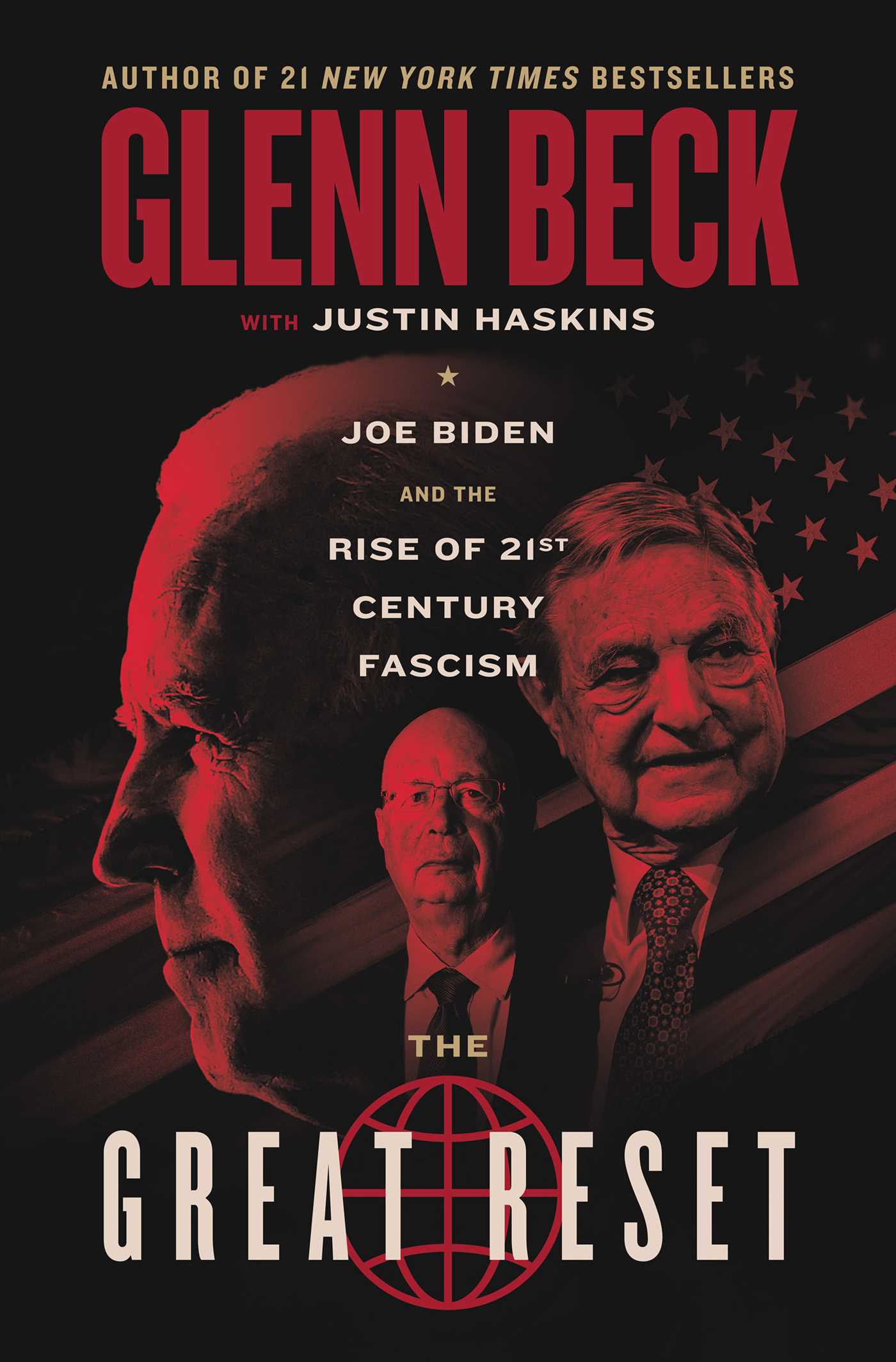
The Great Reset | Book by Glenn Beck, Justin Trask Haskins | Official  Publisher Page | Simon & Schuster

Introduction

Many of you have heard the term ‘The Great Reset’, but very few people know what it is or how it works.  This article will hopefully simplify what The Great Reset is and its objective.

If you really want to understand this subject, consider ordering ‘The Great Reset’ (book cover photo above) from Glenn Beck’s website.  (Be careful to not buy the wrong book — look for this book cover.  A Leftist wrote a much ‘kinder and gentler’ dishonest version to pull readers away from Glenn’s book.)  There are hundreds of references in Glenn’s book notating his sources,  i.e., facts.  You will learn the history, steps, actions, and future impact of this movement by reading this one book.  This article is a summary of that entire book.  Although this is a long article, it is much shorter than reading over 300 pages of the book.  I’d still suggest buying the book.

The High-Level View

The ‘World Economic Forum‘ (WEF) an international group created to develop a new  world [order] economic engine.  Why do we need a new engine?  Primarily because the elites of this world believe that we need more control and guidance with their leadership — and more importantly, to amass even more wealth than they have now.  This is a plan to destroy capitalism and take us all back to serfdom.

There are three major components of The Great Reset:  MMT, ESG, and DUSD.

MMT

‘Modern Monetary Theory’ (MMT) is an extension of the concept of Quantitative Easing (QE) — also known as Keynesian theory.   QE is the printing of money [today digitally] which in turn reduces the value of each dollar.  Governments use this technique to effectively reduce what they owe to other countries (who purchased that country’s bonds) and buy back their debt (eliminating it) with ‘cheaper’ money (that they create out of thin air).  That is the explanation of MMT in brief.  By doing a search for ‘MMT’ at the WEF’s website, you should find these two relevant articles: The Power and Poison of MMT (PDF) and A Comparison of 2020 to the Roaring Twenties.  Just two examples of the potential impact to our country.

ESG

‘Environmental, Social, Governance’ (ESG) is a ‘scoring’ system designed to control companies and people.

Due to the ‘pesky’ constitution we created over 200 years ago, it is more difficult for authoritarian groups to violate a person’s natural rights.  Recognizing that point, the Left (WEF, et al) has come up with a plan to get around our constitution.  That is, by using companies/corporations to control us in lieu of government.  This approach works because the constitution only relates to the federal government.  Therefore, companies cannot be sued for violations of our constitutional rights.  (Our founders obviously never dreamed of our current situation.) Those companies can then use the ESG scoring system to control the behavior of U.S. citizens using the ‘carrot and stick’ approach to motivation.  “You follow my rules, you get a carrot.  You violate them, you get the stick!”  So how does ESG work?  ESG is by definition a three-pronged attack on America — each letter being an attack point.

Environmental (E) — The letter ‘E’ attacks anything that the Left sees as a threat to their holy grail — ‘existential weather change’ — i.e., primarily fossil fuels.  If people buy oil products, coal, or natural gas, that is a major problem for the Left — and soon to be your problem too.  If you do not support their objective, you will be punished by lowering your ‘E’ score.

Social (Justice) (J) — The letter ‘S’ attacks the historical definition of law and order.  Whereas in the past if you committed a crime, you were prosecuted, given a trial, and if convicted you were put in jail.  Today, unfortunately, that is all too often no longer the case.  The reasoning is that if you in fact committed a crime, it was probably for a good reason.  You are a minority being discriminated against, or there was a lack of ‘equity’ (vs. equality), etc.  But if you are white and part of the middle class for example, you may be ‘designated’ a racist.  If you do not support the social justice view, you will be punished by lowering your ‘S’ score.

Governance (G) — Governance relates to your support of the government.  Your actions, such as buying a gun or bullets, violates the governance criteria (ATF) for example.  If you do not support the government’s views, you will be punished by lowering your ‘G’ score.

Right about now you’re probably wondering how this would actually be implemented.  The answer is to use the ESG concept in all aspects of your life.  If you want to invest money, you had best not invest in anything to do with oil for example.  If you do, your ‘E’, score would be lowered.  If you were to buy bullets, your ‘S’ score would take a hit.  And your  ‘G’ score could also be degraded because the ATF doesn’t want you to have bullets!  The impact being, that potentially you would not be able to get a loan (for a house or business), being able to bank, or not being able to buy anything at all (get at your money)!  e.g., Canadian truckers

The federal government (along with the WEF) is already looking into potential law changes to require the big three credit bureaus (Equifax, Experian, and TransUnion) to implement the government’s new calculations for your credit score.  That could mean for example that your loan rate might be adjusted higher or you would get no loan at all.

Here’s a few examples of the use of ESG in corporations.

Climate change presents mega investing opportunity — Fidelity Investments

Socially Responsible Investing — Schwab Investments

The ESG Report website (consultants) uses flowery words to describe the savior of our world — ESG.  The following is copied from their About page.

What does ESG mean?  ESG stands for Environmental, Social and Governance which is a framework for defining and measuring sustainability. ESG integrates traditionally disparate aspects of sustainability and directs attention to these issues in order to create a more sustainable world. Companies adopt these guidelines so as to be transparent to investors and the public about their impact on the environment and society.

Unlike traditional corporate financial reporting, ESG focuses on these 3 specific areas:

    1. Environment: This focuses on how the company’s business activities impact on sustainable environmental practices.
    2. Social: This focuses on how a companies’ operations and their products or services affect society and specifically, those that work for them and live near to where they operate.
    3. Governance: This focuses more on internal corporate practices such as ethical sourcing, workplace relations and employee benefits.

Doesn’t sound too bad, huh?  This makes Jen Psaki sound like a straight shooter, who is open and honest.

A Last Word on ESG

Let’s just look at the ‘E’ part of this process to demonstrate the false proposition regarding ‘green’ power being posed to control the American public.  Here are just a few facts that demonstrate that the ultimate plan of the Left is to destroy America.

  1. Nuclear power is cheaper, safer, more sustainable, than wind or solar power given our existing nuclear facilities.
  2. Existing nuclear power plants last much longer than the alternative solar or wind solutions currently.  Current technology nuclear systems are even more efficient, less expensive than existing facilities, and do not have to be replaced or upgraded for several decades.  Whereas solar and wind must be replaced every 20 years.
  3. Nuclear plants require a very small footprint to operate, are highly efficient, and safe.  However, to create the equivalent power needed to operate in America today, it would take 57,048 square miles of land for 18.8 billion solar panels.  And wind turbines are even worse.  The 2.12 million turbines required to power the U.S. would take 500,682 square miles of U.S. land!  Plus an additional large amount of land would be required for the disposal of wind and solar hazardous materials.
  4. Last but not least, the American death toll every year as a result of brown or blackouts could be huge and the cost of life would be immeasurable.

Ask yourself, “Does this makes sense to you”?

The Digital U.S. Dollar

Digital U.S. Dollar (DUSD) — The American public has no real idea of how much debt we have already — continued MMT spending would skyrocket our debt!  Without quoting numbers, suffice it to say, we are in hock for hundreds of trillions of dollars now!

The federal government and the federal reserve are currently planning on implementing a new U.S. currency — the DUSD.  If you’re looking for proof of such action, look no further than an internet search example here.  This is just one of many hits on the topic — Giancarlo Testimony.  Note in the URL the address:  ‘https://www.banking.senate.gov’.  Yes, this is real.

As stated earlier, QE or MMT makes it easy for the feds to ‘print’ money and debase the value of the dollar.  Which means our debt might go down (on paper) if they go to the DUSD.  But, this could also lead to the world losing all remaining faith in the dollar and our losing the reserve monetary status.  If that happened, our dollar would be worth nothing overnight.   (NOTE:  China today is sitting on over 4000 tons of gold and mining more every day.  Do you think that maybe they think their currency will be the new reserve currency?)

Through the implementation of the DUSD, the feds also could easily give every American a ‘haircut’ (a less than 1:1 exchange of their money) if they chose — one day you have $100,000 in the bank, and the next you have $80,000 — does that sound impossible?  Talk to the people in the EU.  Their government gave everyone with a balance over 100,000 euros a 20% haircut when their government was strapped for cash.  And several other countries still have ‘negative’ interest rates in their banks (e.g., Japan).  Somewhat the same idea, but an ongoing ‘taxation’.

But the key issue is, with the DUSD your money would be tracked for every cent in and out of your ‘pocket’.  Which that information could obviously be used to set your ESG score nationally.

Summary

Allow me to summarize the intent of the Reset.  It’s purpose is to set in motion (already done) a process whereby government and business can form an alliance — generally referred to as an oligarchy — to work together with the objective of reinventing our economic system.  That means, a new set of ‘rules’ will be implemented to control how much money is spent, where, and by whom.

What does that mean?  That, our federal government can spend as much money as they see fit, that they can spend it where they want, and determine who will benefit from that injection of money.  (Infrastructure today means more money to non-workers and social give-away programs, not the improvement of production.)  Also, it means that YOU shall spend your money where they want, and if not, you will be penalized for not conforming.

If you believe what you just read, then this article should motivate you to take action.  It is of extreme importance at this point that every American ‘resist’ this notion and take whatever legal action they can to insure this does not proceed further.   You can start by contacting your state and federal representatives.  Several states are taking action to outlaw the use of ESG ratings.

This is not just an American plan, but a worldwide plan (i.e., WEF).  This is a plan for a ‘one world government’ which will implement a digital currency — with the implication of controlling the money of everyone in the world — for the purpose of gaining ‘total’ control over every person on this planet.  If I’m not mistaken this idea was documented as a prophecy in the bible.

If you don’t believe this report, believe in the bible…

A Hated President’s Accomplishments in “One Term”

First, to clarify the Trump Derangement Syndrome (TDS) — it is not about hate, but it is about fear.   The Left has feared Trump since before being elected as president of the United States.  They fear him because he is the antithesis of what they stand for — control, power, and oppression.  And understand that the definition of ‘Left’ today is progressivism, Marxism, and communism — very similar to China’s communist party rule today.  That, ladies and gentlemen is where we are headed now.

America is not about hate.  It is not about racism.  It is about freedom.  The freedom to live your life independently and without suppression.  Typically you don’t need a bureaucrat breathing down your neck telling you what is right or wrong, good or bad.  YOU  are typically capable of making those decisions without someone who has typically accomplished nothing of significance. 

You, as well anyone else in this country, should be able to succeed “on your merit” without outside influence unless asked for.

Ask yourself, would you discard someone who could accomplish this much in a country being overrun by bureaucrats and political bullies?

Trump Administration Accomplishments  2016-2020

Unprecedented Economic Boom
Before the China Virus invaded our shores, we built the world’s most prosperous economy.
• America gained 7 million new jobs – more than three times government experts’ projections.
• Middle-Class family income increased nearly $6,000 – more than five times the gains during the entire previous administration.
• The unemployment rate reached 3.5 percent, the lowest in a half-century.
• Achieved 40 months in a row with more job openings than job-hirings.
• More Americans reported being employed than ever before – nearly 160 million.
• Jobless claims hit a nearly 50-year low.
• The number of people claiming unemployment insurance as a share of the population hit its lowest on record.
• Incomes rose in every single metro area in the United States for the first time in nearly 3 decades.
Delivered a future of greater promise and opportunity for citizens of all backgrounds.
• Unemployment rates for African Americans, Hispanic Americans, Asian Americans, Native Americans, veterans, individuals with disabilities, and those without a high school diploma all reached record lows.
• Unemployment for women hit its lowest rate in nearly 70 years.
• Lifted nearly 7 million people off of food stamps.
• Poverty rates for African Americans and Hispanic Americans reached record lows.
• Income inequality fell for two straight years, and by the largest amount in over a decade.
• The bottom 50 percent of American households saw a 40 percent increase in net worth.
• Wages rose fastest for low-income and blue collar workers – a 16 percent pay increase.
• African American home ownership increased from 41.7 percent to 46.4 percent.
Brought jobs, factories, and industries back to the USA.
• Created more than 1.2 million manufacturing and construction jobs.
• Put in place policies to bring back supply chains from overseas.
• Small business optimism broke a 35-year old record in 2018.
Hit record stock market numbers and record 401ks.
• The DOW closed above 20,000 for the first time in 2017 and topped 30,000 in 2020.
• The S&P 500 and NASDAQ have repeatedly notched record highs.
Rebuilding and investing in rural America.
• Signed an Executive Order on Modernizing the Regulatory Framework for Agricultural Biotechnology Products, which is bringing innovative new technologies to market in American farming and agriculture.
• Strengthened America’s rural economy by investing over $1.3 billion through the Agriculture Department’s ReConnect Program to bring high-speed broadband infrastructure to rural America.  Achieved a record-setting economic comeback by rejecting blanket lock-downs.
• An October 2020 Gallup survey found 56 percent of Americans said they were better off during a pandemic than four years prior.
• During the third quarter of 2020, the economy grew at a rate of 33.1 percent – the most rapid GDP growth ever recorded.
• Since coronavirus lock downs ended, the economy has added back over 12 million jobs, more than half the jobs lost.
• Jobs have been recovered 23 times faster than the previous administration’s recovery.
• Unemployment fell to 6.7 percent in December, from a pandemic peak of 14.7 percent in April – beating expectations of well over 10 percent unemployment through the end of 2020.
• Under the previous administration, it took 49 months for the unemployment rate to fall from 10 percent to under 7 percent compared to just 3 months for the Trump Administration.
• Since April, the Hispanic unemployment rate has fallen by 9.6 percent, Asian-American unemployment by 8.6 percent, and Black American unemployment by 6.8 percent.
• 80 percent of small businesses are now open, up from just 53 percent in April.
• Small business confidence hit a new high.
• Home builder confidence reached an all-time high, and home sales hit their highest reading since December 2006.
• Manufacturing optimism nearly doubled.
• Household net worth rose $7.4 trillion in Q2 2020 to $112 trillion, an all-time high.
• Home prices hit an all-time record high.
• The United States rejected crippling lock downs that crush the economy and inflict countless
public health harms and instead safely reopened its economy.
• Business confidence is higher in America than in any other G7 or European Union country.
• Stabilized America’s financial markets with the establishment of a number of Treasury Department supported facilities at the Federal Reserve.

Tax Relief for the Middle Class
Passed $3.2 trillion in historic tax relief and reformed the tax code.
• Signed the Tax Cuts and Jobs Act – the largest tax reform package in history.
• More than 6 million American workers received wage increases, bonuses, and increased benefits thanks to the tax cuts.
• A typical family of four earning $75,000 received an income tax cut of more than $2,000 – slashing their tax bill in half.
• Doubled the standard deduction – making the first $24,000 earned by a married couple completely tax-free.
• Doubled the child tax credit.
• Virtually eliminated the unfair Estate Tax, or Death Tax.
• Cut the business tax rate from 35 percent – the highest in the developed world – all the way down to 21 percent.
• Small businesses can now deduct 20 percent of their business income.
• Businesses can now deduct 100 percent of the cost of their capital investments in the year the investment is made.
• Since the passage of tax cuts, the share of total wealth held by the bottom half of households has increased, while the share held by the top 1 percent has decreased.
• Over 400 companies have announced bonuses, wage increases, new hires, or new investments in the United States.
• Over $1.5 trillion was repatriated into the United States from overseas.
• Lower investment cost and higher capital returns led to faster growth in the middle class, real wages, and international competitiveness.
Jobs and investments are pouring into Opportunity Zones.
• Created nearly 9,000 Opportunity Zones where capital gains on long-term investments are taxed at zero.
• Opportunity Zone designations have increased property values within them by 1.1 percent, creating an estimated $11 billion in wealth for the nearly half of Opportunity Zone residents who own their own home.
• Opportunity Zones have attracted $75 billion in funds and driven $52 billion of new investment in economically distressed communities, creating at least 500,000 new jobs.
• Approximately 1 million Americans will be lifted from poverty as a result of these new investments.
• Private equity investments into businesses in Opportunity Zones were nearly 30 percent higher than investments into businesses in similar areas that were not designated Opportunity Zones.

Massive Deregulation
Ended the regulatory assault on American Businesses and Workers.
• Instead of 2-for-1, we eliminated 8 old regulations for every 1 new regulation adopted.
• Provided the average American household an extra $3,100 every year.
• Reduced the direct cost of regulatory compliance by $50 billion, and will reduce costs by an additional $50 billion in FY 2020 alone.
• Removed nearly 25,000 pages from the Federal Register – more than any other president. The previous administration added over 16,000 pages.
• Established the Governors’ Initiative on Regulatory Innovation to reduce outdated regulations at the state, local, and tribal levels.
• Signed an executive order to make it easier for businesses to offer retirement plans.
• Signed two executive orders to increase transparency in Federal agencies and protect Americans and their small businesses from administrative abuse.
• Modernized the National Environmental Policy Act (NEPA) for the first time in over 40 years.
• Reduced approval times for major infrastructure projects from 10 or more years down to 2 years or less.
• Helped community banks by signing legislation that rolled back costly provisions of Dodd-Frank.
• Established the White House Council on Eliminating Regulatory Barriers to Affordable Housing to bring down housing costs.
• Removed regulations that threatened the development of a strong and stable internet.
• Eased and simplified restrictions on rocket launches, helping to spur commercial investment in space projects.
• Published a whole-of-government strategy focused on ensuring American leadership in automated vehicle technology.
• Streamlined energy efficiency regulations for American families and businesses, including preserving affordable light bulbs, enhancing the utility of shower heads, and enabling greater time savings with dishwashers.
• Removed unnecessary regulations that restrict the seafood industry and impede job creation.
• Modernized the Department of Agriculture’s biotechnology regulations to put America in the lead to develop new technologies.
• Took action to suspend regulations that would have slowed our response to COVID-19, including living restrictions on manufacturers to more quickly produce ventilators.  Successfully rolled back burdensome regulatory overreach.
• Rescinded the previous administration’s Affirmatively Furthering Fair Housing (AFFH) rule, which would have abolished zoning for single-family housing to build low-income, federally subsidized apartments.
• Issued a final rule on the Fair Housing Act’s disparate impact standard.
• Eliminated the Waters of the United States Rule and replaced it with the Navigable Waters Protection Rule, providing relief and certainty for farmers and property owners.
• Repealed the previous administration’s costly fuel economy regulations by finalizing the Safer Affordable Fuel Efficient (SAFE) Vehicles rule, which will make cars more affordable, and lower
the price of new vehicles by an estimated $2,200.
Americans now have more money in their pockets.
• Deregulation had an especially beneficial impact on low-income Americans who pay a much higher share of their incomes for over regulation.
• Cut red tape in the healthcare industry, providing Americans with more affordable healthcare and saving Americans nearly 10 percent on prescription drugs.
• De-regulatory efforts yielded savings to the medical community an estimated $6.6 billion – with a reduction of 42 million hours of regulatory compliance work through 2021.
• Removed government barriers to personal freedom and consumer choice in healthcare.
• Once fully in effect, 20 major de-regulatory actions undertaken by the Trump Administration are expected to save American consumers and businesses over $220 billion per year.
• Signed 16 pieces of de-regulatory legislation that will result in a $40 billion increase in annual real incomes.

Fair and Reciprocal Trade

• Immediately withdrew from the job-killing Trans-Pacific Partnership (TPP).• Ended the North American Free Trade Agreement (NAFTA), and replaced it with the brand new United States-Mexico-Canada Agreement (USMCA).
• The USMCA contains powerful new protections for American manufacturers, auto-makers, farmers, dairy producers, and workers.
• The USMCA is expected to generate over $68 billion in economic activity and potentially create over 550,000 new jobs over ten years.
• Signed an executive order making it government policy to Buy American and Hire American, and took action to stop the outsourcing of jobs overseas.
• Negotiated with Japan to slash tariffs and open its market to $7 billion in American agricultural products and ended its ban on potatoes and lamb.
• Over 90 percent of American agricultural exports to Japan now receive preferential treatment, and most are duty-free.
• Negotiated another deal with Japan to boost $40 billion worth of digital trade.
• Renegotiated the United States-Korea Free Trade Agreement, doubling the cap on imports of American vehicles and extending the American light truck tariff.
• Reached a written, fully-enforceable Phase One trade agreement with China on confronting pirated and counterfeit goods, and the protection of American ideas, trade secrets, patents, and trademarks.
• China agreed to purchase an additional $200 billion worth of United States exports and opened
market access for over 4,000 American facilities to exports while all tariffs remained in effect.
• Achieved a mutual agreement with the European Union (EU) that addresses unfair trade practices and increases duty-free exports by 180 percent to $420 million.
• Secured a pledge from the EU to eliminate tariffs on American lobster – the first United States- European Union negotiated tariff reduction in over 20 years.
• Scored a historic victory by overhauling the Universal Postal Union, whose outdated policies were undermining American workers and interests.
• Engaged extensively with trade partners like the EU and Japan to advance reforms to the World Trade Organization (WTO).
• Issued a first-ever comprehensive report on the WTO Appellate Body’s failures to comply with WTO rules and interpret WTO agreements as written.
• Blocked nominees to the WTO’s Appellate Body until WTO Members recognize and address longstanding issues with Appellate Body activism.
• Submitted 5 papers to the WTO Committee on Agriculture to improve Members’ understanding of how trade policies are implemented, highlight areas for improved transparency, and encourage members to maintain up-to-date notifications on market access and domestic
support.  Took strong actions to confront unfair trade practices and put America First.
• Imposed tariffs on hundreds of billions worth of Chinese goods to protect American jobs and stop China’s abuses under Section 232 of the Trade Expansion Act of 1962 and Section 301 of the Trade Act of 1974.
• Directed an all-of-government effort to halt and punish efforts by the Communist Party of China to steal and profit from American innovations and intellectual property.
• Imposed tariffs on foreign aluminum and foreign steel to protect our vital industries and support our national security.
• Approved tariffs on $1.8 billion in imports of washing machines and $8.5 billion in imports of solar panels.
• Blocked illegal timber imports from Peru.
• Took action against France for its digital services tax that unfairly targets American technology companies.
• Launched investigations into digital services taxes that have been proposed or adopted by 10 other countries.

Historic support for American farmers
• Successfully negotiated more than 50 agreements with countries around the world to increase foreign market access and boost exports of American agriculture products, supporting more than 1 million American jobs.
• Authorized $28 billion in aid for farmers who have been subjected to unfair trade practices – fully funded by the tariffs paid by China.
• China lifted its ban on poultry, opened its market to beef, and agreed to purchase at least $80 billion of American agricultural products in the next two years.
• The European Union agreed to increase beef imports by 180 percent and opened up its market to more imports of soybeans.
• South Korea lifted its ban on American poultry and eggs, and agreed to provide market access for record exports of American rice.
• Argentina lifted its ban on American pork.
• Brazil agreed to increase wheat imports by $180 million a year and raised its quotas for purchases of United States ethanol.
• Guatemala and Tunisia opened up their markets to American eggs.
• Won tariff exemptions in Ecuador for wheat and soybeans.
• Suspended $817 million in trade preferences for Thailand under the Generalized System of Preferences (GSP) program due to its failure to adequately provide reasonable market access for American pork products.
• The amount of food stamps redeemed at farmers markets increased from $1.4 million in May 2020 to $1.75 million in September 2020 – a 50 percent increase over last year.
• Rapidly deployed the Coronavirus Food Assistance Program, which provided $30 billion in support to farmers and ranchers facing decreased prices and market disruption when COVID-19 impacted the food supply chain.
• Authorized more than $6 billion for the Farmers to Families Food Box program, which delivered over 128 million boxes of locally sourced, produce, meat, and dairy products to charity and faith based
organizations nationwide.
• Delegated authorities via the Defense Production Act to protect breaks in the American food supply chain as a result of COVID-19.

American Energy Independence — Unleashed America’s oil and natural gas potential
• For the first time in nearly 70 years, the United States has become a net energy exporter.
• The United States is now the number one producer of oil and natural gas in the world.
• Natural gas production reached a record-high of 34.9 quads in 2019, following record high production in 2018 and in 2017.
• The United States has been a net natural gas exporter for three consecutive years and has an export capacity of nearly 10 billion cubic feet per day.
• Withdrew from the unfair, one-sided Paris Climate Agreement.
• Canceled the previous administration’s Clean Power Plan, and replaced it with the new

Affordable Clean Energy rule
• Approved the Keystone XL and Dakota Access pipelines.
• Opened up the Arctic National Wildlife Refuge (ANWR) in Alaska to oil and gas leasing.
• Repealed the last administration’s Federal Coal Leasing Moratorium, which prohibited coal leasing on Federal lands.
• Reformed permitting rules to eliminate unnecessary bureaucracy and speed approval for mines.
• Fixed the New Source Review permitting program, which punished companies for upgrading or repairing coal power plants.
• Fixed the Environmental Protection Agency’s (EPA) steam electric and coal ash rules.
• The average American family saved $2,500 a year in lower electric bills and lower prices at the gas pump.
• Signed legislation repealing the harmful Stream Protection Rule.
• Reduced the time to approve drilling permits on public lands by half, increasing permit applications to drill on public lands by 300 percent.
• Expedited approval of the NuStar’s New Burgos pipeline to export American gasoline to Mexico.
• Streamlined Liquefied natural gas (LNG) terminal permitting and allowed long-term LNG export authorizations to be extended through 2050.
• The United States is now among the top three LNG exporters in the world.
• Increased LNG exports five-fold since January 2017, reaching an all-time high in January 2020.
• LNG exports are expected to reduce the American trade deficit by over $10 billion.
• Granted more than 20 new long-term approvals for LNG exports to non-free trade agreement countries.
• The development of natural gas and LNG infrastructure in the United States is providing tens of thousands of jobs, and has led to the investment of tens of billions of dollars in infrastructure.
• There are now 6 LNG export facilities operating in the United States, with 2 additional export projects under construction.
• The amount of nuclear energy production in 2019 was the highest on record, through a combination of increased capacity from power plant upgrades and shorter refueling and maintenance cycles.
• Prevented Russian energy coercion across Europe through various lines of effort, including the Partnership for Transatlantic Energy Cooperation, civil nuclear deals with Romania and Poland,
and opposition to Nord Stream 2 pipeline.
• Issued the Presidential Permit for the A2A railroad between Canada and Alaska, providing energy resources to emerging markets.
Increased access to our country’s abundant natural resources in order to achieve energy independence.
• Renewable energy production and consumption both reached record highs in 2019.
• Enacted policies that helped double the amount of electricity generated by solar and helped increase the amount of wind generation by 32 percent from 2016 through 2019.
• Accelerated construction of energy infrastructure to ensure American energy producers can deliver their products to the market.
• Cut red tape holding back the construction of new energy infrastructure.
• Authorized ethanol producers to sell E15 year-round and allowed higher-ethanol gasoline to be distributed from existing pumps at filling stations.
• Ensured greater transparency and certainty in the Renewable Fuel Standard (RFS) program.
• Negotiated leasing capacity in the Strategic Petroleum Reserve to Australia, providing American taxpayers a return on this infrastructure investment.
• Signed an executive order directing Federal agencies to work together to diminish the capability of foreign adversaries to target our critical electric infrastructure.
• Reformed Section 401 of the Clean Water Act regulation to allow for the curation of interstate infrastructure.
• Resolved the OPEC (Organization of the Petroleum Exporting Countries) oil crisis during COVID-19 by getting OPEC, Russia, and others to cut nearly 10 million barrels of production a day, stabilizing world oil prices.
• Directed the Department of Energy to use the Strategic Petroleum Reserve to mitigate market volatility caused by COVID-19.


So now that you read all of that, how do you feel about such a man now?   Do you think you might vote for him in 2024?  Understand that only half of Americans (allegedly) dislike Trump, the other half love him!  Which half do you think is taking this country down?  Which should be obvious by now..?  

For outside reference you can find this list at:  Trump Accomplishments

Please share this article with your friends and co-workers as this site has been dropped out of Google’s searches. Apparently they “can’t handle the truth”.

Global Warming’s Replacement — Pandemics

During the Obama administration our unemployment reached over 6% in the U.S.  Understand that our calculation for unemployment was changed when Bill Clinton took office in 1993.  The new popular calculation used today does not include those things that made our estimates higher.  So when you hear of unemployment in the 1930’s, those calculations were using the ‘old’ estimates.  Today’s 6% advertised is actually 10-12% using the old calculation.  The U-6 number relates closest to the pre-1993 values.

Now today, under president Trump’s watch, we were seeing 3.5% unemployment which was one of the lowest unemployment numbers in our country since 1969.  But suddenly that all came to a quick halt thanks to the Corona virus, aka COVID-19.  Now our current unemployment number is 10% (new calculation). But the Left is constantly slamming Trump for being a poor leader.  Our Corona virus and the sudden economic downturn seems like a coincidence doesn’t it?  Maybe, but then maybe not.

On April 3, 2015 Bill Gates gave a talk at a Ted Talk forum for the purpose of sharing his vision of what we should be concerned with — of even greater importance than war.  If  you watch the first minute of this video, you will get a good enough idea of what he is trying to convey in his talk.

As you can see, his greatest fear is something that looks a great deal like COVID-19 — interesting.

Then on October 18, 2019 a consortium of leaders were brought together to address what was a follow-on to Bill Gate’s suggestion of our future demise.  This gathering consisted of leaders from various interests and countries around the world. 15 global business, government, and public health leaders were players in the simulation exercise that highlighted unresolved real-world policy and economic issues that could be solved with sufficient political will, financial investment, and attention now and in the future.

The gathering was entitled “Event 201” and was held at the Pierre hotel in New York, NY.  It was funded by the Open Philanthropy Project in concert with Johns Hopkins Bloomberg school of Public Health; World Economic Forum; and the Bill and Melinda Foundation.  (You might consider checking out these sites to determine their objectives.)

The primary objective of this meeting was to brainstorm how best to address a worldwide pandemic through the coordination of governments and corporate leadership.  To set the stage, they started the meeting with the following video for attendees to view which depicts a potential future pandemic.

Notice the unbelievably coincidental likeness of the proposed scenario and the real one we experience today — COVID-19.  (Pigs were first instead of bats regarding the spread of the virus.)

Consider these dates:  Apr. 3, 2015 Gates gives his talk;  Oct. 18, 2019 Event 201 is held;  Nov. 17, 2019 the first case of COVID-19 was discovered in the Hubei province of China which was a 55 year old person;  shortly after subsequent cases were discovered in the city of Wuhan which is located in the Hubei province.

Now, in recent weeks, it has been discovered that the virus’s genesis was actually in the level-4 biological warfare lab (decades old) also located in Wuhan where allegedly an employee may have leaked the virus into the public domain.  This information has been the source of a great deal of ‘conspiracy’ stories alleging that the Chinese Communist Party (CCP) may have done so on purpose.  Of course one must consider the fact that the CCP has been lying to us for weeks or months, it isn’t too hard to believe.

Yesterday vs. Today

Global warming has been a mantra that begs mankind to alter their way of living in order to save ‘mother earth’.  But the ‘end’ hasn’t appeared anywhere near close at hand.  The seas aren’t rising, temperatures aren’t higher — actually lower than previous years — and the motivation for the socialists to alter our country has basically evaporated over the last 10-15 years with respect to global warming.  So now we apparently have this new issue to face in its place — a global pandemic.

It’s interesting to note that the Event 201 meeting was held on Apr. 18th and four days later (Apr. 22nd) was the celebration of Earth day — which coincidentally is Earth day’s 50th anniversary.  Which, by the way, just happens to be Vladimir Lenin’s birthday. Oh, and the ‘lock down’ is supposed to be lifted on May 1st which just happens to be ‘May Day‘ — which is a socialist holiday and a day for the workers of the world.

My how the coincidences just seem to keep piling up.  Hopefully by now you are starting to see the connection between the socialist movement here in America — which is in the news daily — and our current situation.

The Socialist Process

During every country’s take-over by a communist movement, the economy of the subject country is typically in a poor state.  Just prior to the ‘flip’ of that country, chaos is growing and the people are demonstrating — if not rioting.  e.g., Venezuela  This is because a happy and comfortable people need motivation to ‘fundamentally change‘ their society.  To facilitate this change you need the following:  elites to drive the change (the future leaders);  a large government to help drive the change with force if necessary; and people within the government to aid in the government’s direction.  Have you noticed the unreasonable actions taken by local government officials?  Some of it is out of the world war II era.

If socialists can develop a dependence on that government, they can create a society of dependent people — aka, slaves.  Although this sounds like an outlandish idea, we are seeing the steps being taken right in front of us.  We continue to lose constitutional rights almost every year.  This socialism thing isn’t just about economy, it’s also about a loss of fundamental rights.

The following is evidence of everything documented in this article which was created by those leading the Event 201 meeting.  The stated goals in the videos below sound very altruistic and wonderful for all of us.  But with very little depth of thought, and the ‘coincidental’ occurrences listed above as evidence, the real motivation should be more obvious.

All of these videos were created during the 3.5 hour meeting on Apr. 18th.  The entire meeting can be viewed at this link.

Segment 1 – Intro and Medical Countermeasures (MCM) Discussion

Segment 2 – Trade & Travel Discussion

Segment 3 – Finance Discussion

Segment 4 – Communications Discussion and Epilogue Video

Segment 5 – Hotwash and Conclusion

As stated several times before in my articles, we as citizens and responsible people of this country had best wake up very soon, or we’re likely to find ourselves fighting for food and survival at the basic level.  Millions of people before us did nothing, and millions died without a chance of survival in a socialist state.  It’s your choice as well as mine.  You’re either part of the solution or part of the problem. . . .

Consider reading the other articles regarding communism in America at: Justice4USA.wordpress.com

The evidence is mounting…  rapidly now.


Small Business — The Heart of America

Many people today are struggling a lot — especially sole proprietors — aka,  small business.  But that isn’t totally because of the COVID virus. We as a people in the U.S. are often in trouble due to not using wise money management, lack of income, or both.  Today’s Americans have created $1T in ‘personal debt’.  We’re talking credit cards, not home loans.  And some of those people are business owners — mom and pop.  Our nation depends on those businesses!  A lot!

I’ve found that a great deal of those who are in favor of socialism believe that large corporate companies represent 70-90% of all business in America.  Not so.  Those ‘little guys’ mentioned earlier are the workhorse of this country.  They represent over 90% of all companies in America!  That’s 90% of 28.7M companies!  (A conservative estimate.)  88% of those companies have less than 20 employees. And 40% of them have a revenue under $100K per year.  20% of small businesses are employer companies and 80% are non-employer companies.  (e.g., mom and pop)  They generate almost 50% of our country’s GDP annually.  And lastly, they account for 66% of all jobs in this country.  If we let them fail, we all fail.

Quite a different description of our economy than you expected I’m sure.

Consequently, we depend on these smaller companies for almost everything.  The lock down of Americans should be making that point more obvious every day.  Have you tried eating out lately?

The key point here is that these small companies can make or break our country’s economy.  And many of those companies have been struggling before this economic implosion.  This means that when this pandemic is over — assuming it does end — there will be a big hole in our economy.  An estimate of our unemployment situation has gone from 3.4% to 10-17% practically over night.  And we aren’t done yet.  Those unemployment numbers are expected to rise for months to come.

Wall street cheerleaders are trying to say that we will see a “V” curve in the market.  This means it dropped like a rock and will take off again (any minute) like a rocket — don’t bank on that.  A more realistic expectation is that it will take years for us to recover.

So what should you do?  I’ve been telling people to get out of debt NOW.  Many have not listened.  As a result, it will be harder for those who are “behind” to catch up, and many won’t.  Things are about to change for the worse.  So now is the time to get yourself in a position to survive our future.  Prepare.

It is a subject far to complex to explain in this article, but our capitalist system has been abused.  Capitalism only works if you have ethics, moral values, and little greed.  However, socialism would make our situation even worse . . .  a LOT worse.

With the advent of our current crisis, the U.S. government has taken steps to “save us” by lending money to corporations with the understanding that our government will take as collateral a percentage of those companies.  That sounds a lot like socialism.  Which brings to mind the “boiling frog”.  We the people have been in that boiling pot for decades and have accepted things that would never have considered in prior years.  Today, we can’t even go outside due to government orders.  The water is getting hotter.

In November we’re going to vote for a president.  If you think more socialism is the answer to our problem, then we should just dig up Lenin and not mess around with Sanders or Biden.  It will take strength, courage, tenacity, sacrifice, and help from our Maker to dig us out of this hole we have dug.

We’ve done what felt good for a long time, living for today and ignoring tomorrow.  It’s time we do what is right for everyone, not by taking money from one group to give to another.  But by changing what we do with our money and resources and do what is right for all of America.

Please share this information with friends and implore them to vote intelligently in November.  Do what is right for America, not just you.


American Take-over by Globalists

Image result for google agenda 2021 2030

(Note: The links included in this column point to the actual government documents from our congress and the UN.  It is suggested that you gloss over them at a minimum.)

The American people are being played.  The Left is smart enough to mask their true intent and disguise themselves as a more palatable term such as socialists.  But in reality, that term is being misused way too much.

When the average person refers to a socialist country, they often mention Switzerland, Sweden, Denmark, and other European countries.  But in reality, those are not socialist countries — they are capitalist countries with high taxes.  Examples of socialist countries are: North Korea, Cuba, Venezuela, and China.  You might say that those are communist countries, and you’d be right.  But today those two terms are used synonymously — rightly or wrongly.  To be more correct, you might say that socialist countries control some of the property and business, whereas communist countries control most of it.  Also, in a communist country there is no pretense of human rights — they are in fact what ever the communist party deems you to have . . .  today.

Globalism is another term often used which is not clearly understood in our country.  Often the contemporary use of that term refers to a communist threat trying to turn the entire world into a communist society — i.e., a one world government.

Enter the United Nations (UN).  This august group of representatives around the world have their own ideas of how you and I should live.  They have even written their ideas in print and submitted them to the world!  But have you heard about those ideas?  Probably not.  Why not you ask?  Because the media in this country — controlled by the Left — have chosen to keep the happy American mushrooms in the dark until it is too late.

The globalist’s objective is global power and wealth — the modern day Robin Hood, if you will.  The exception is, instead of taking from one rich person (you), they will take from one country (you again) and give to another (a long list of many).  Their plan is to use subjects not truly understood by most, to gain power and riches.

About now you’re wondering what plan are you talking about?  The original answer was Agenda 2021.  This was a plan created by the UN in 1992.  It’s purpose was to define the ‘rules’ for everyone in the world (that includes you) and how resources will be used and who controls them.  (You’re free to read the above link, but I warn you, it is over 300 pages long.)  And like most other communist propaganda it is chock-full of wonderful statements of equality, wealth, health, and happiness for everyone everywhere.  But if the reader uses at least two or three neurons in their head, they’ll see through the plot to destroy humanity — once and for all.

But as they say in those ads on TV, “But wait!  There’s more!”

In 2015 the UN came up with their new and improved agenda for the world — enter Agenda 2030.  How much better (or worse) can it get, you ask?  A lot!  The following are the 17 goals of this new version of your slavery plan.

Agenda 2021 & 2030 Sustainable Development Goals

Goal 1. End poverty in all its forms everywhere
Goal 2. End hunger, achieve food security and improved nutrition and promote sustainable agriculture
Goal 3. Ensure healthy lives and promote well-being for all at all ages
Goal 4. Ensure inclusive and equitable quality education and promote lifelong learning opportunities for all
Goal 5. Achieve gender equality and empower all women and girls
Goal 6. Ensure availability and sustainable management of water and sanitation for all
Goal 7 Ensure access to affordable, reliable, sustainable and modern energy for all
Goal 8. Promote sustained, inclusive and sustainable economic growth, full and productive employment and decent work for all
Goal 9. Build resilient infrastructure, promote inclusive and sustainable industrialization and foster innovation
Goal 10. Reduce inequality within and among countries
Goal 11. Make cities and human settlements inclusive, safe, resilient and sustainable
Goal 12. Ensure sustainable consumption and production patterns
Goal 13. Take urgent action to combat climate change and its impacts*
Goal 14. Conserve and sustainably use the oceans, seas and marine resources for sustainable development
Goal 15. Protect, restore and promote sustainable use of terrestrial ecosystems, sustainably manage forests, combat desertification, and halt and reverse land degradation and halt biodiversity loss
Goal 16. Promote peaceful and inclusive societies for sustainable development, provide access to justice for all and build effective, accountable and inclusive institutions at all levels
Goal 17. Strengthen the means of implementation and revitalize the Global Partnership for Sustainable Development

(Copied from Agenda 2030 – page 14)

Welcome to utopia!!

Questions should come to a person’s mind when reading this sort of bunk.  Like, who’s going to pay for all of this?  (You)  How can we eliminate hunger through out the world — today?  (Take your food)  How do we impact the world enough to control the weather?  (Obviously we don’t, but we can take your stuff and give it to those in control to do with as THEY please.)

About now you should be very concerned.  But you say, “Yeah, but our country will never sign up on such bunk.  Oh?  Think again.  Apparently you haven’t heard about House of Representatives bill HR 109.  Maybe you’ve heard of Miss Cortez’s (aka, AOC) “New Green Deal”.?  Yup, the same thing.  No, it isn’t her bill, it belongs to the Democratic party — including the 49 people who signed the bill!  All of those people are socialists in our congress.  If not, why would they sign a bill that is the same as the communist party’s agenda for the world?

So now you know that at least part of your congress is supporting flipping this country to a communist state — with a brief stop-off of socialism — while making us another third-world country in the process — as insane as that may sound.  But that’s only a few people in congress, right?  Nope.  Several cities around the U.S. have implemented Agenda 21 and/or Agenda 30 — for example Austin, Texas.

The overall objective here is to concentrate all power in the world into the hands of a minuscule percentage of people who decide how the other 99% (of 7 billion) live and die in this world.  Imagine, too many people in America today want to strip the wealthy of their money so that the have-nots have more.  Pikers!  The thugs of the UN plan have much loftier goals — they want everyone’s wealth and basic resources — much like Maduro in Venezuela today.  Welcome to the 21st century!!?

You might ask, when could this happen?  We are on the edge of the cliff now.  This plan has been in process for decades of planning right here in the U.S.  (See Google search for: Communist Goals for America)  As to when it happens, it could be very soon.

For example, if a serious economic recession were to occur during president Trump’s first or second term, I’d say it could happen very soon.  The Left would be able to point to conservatives and capitalists and suggest that the socialists have the best answer for survival — socialism.  With a socialist in the presidency, House and Senate, we would be toast in very short order.

Let me put it this way.  Things in nature typically evolve over time.  However, in some cases, they occur seemingly over night, much like a rubber-band snapping after being stretched to its limit.  We are facing that ‘snap’ in our near future if we don’t wake up soon!  Unless we elect people of character, intelligence, and concern — not for themselves — but for this country, our American way of life is as good as over.  Our Bill of Rights and Constitution will become a thing of the past.  All of our rights from then on will come from our rulers.  And those will be not so tolerant rulers, by the way.

With 44% of all (voting) millennials asking for socialism today, we ought to be concerned.  But it is WE THE PEOPLE who are responsible for our own future.  That includes YOU.

The following video is an interview discussing socialism and communism in our world.  It is well worth watching.


America’s Debt and What’s Coming

Early in the 1950s, the average American typically made purchases with cash.  If they wanted to buy Christmas presents, they used layaway plans.  (Make the purchase in a store, make a down payment, and then make payments until paid for — in time for Christmas — hopefully.)  If they needed to buy a car, they often saved up until they had the cash to pay for it.

Then in the 1960s, along came the credit card.  Ah, now you can have what you want now and pay for it later.  But that wasn’t such a bad deal since interest on a credit card was typically only 6%.  (Which everyone thought was outrageous.)

Homes on the other hand, due to their high cost, were items that almost everyone had to buy on time.  A 20-year home loan normally had a 6-8% interest rate.  But in the late 70’s those rates went through the roof!  Interest rates went as high as 18%!  It was a time when buying a home was almost out of the realm of reality for most people.

But, we found a way to get around the situation – we started getting 30-year loans.  This helped the buyer by extending the debt ten more years which made for smaller house payments – but higher total interest paid on a house.  By the 90’s the rates were back down again.  But, the public kept buying homes with a 30-year loan to keep their house payments even lower.  Which means their debt (principle) dropped ever so slightly every year over a very long time, thus increasing interest paid.  It typically took a career to pay off a house.  But to the plus side for those deficient in money management, it meant they could buy those jet skis, ski boat, new car, etc. with the money saved with their re-fi and lower interest rate.

Now today, homes are much more expensive and have lower home loan rates, but the average person is drowning in debt.  Now they buy a home for not $30-50K, but $300-600K+.  When you calculate the interest on a home with that high a cost, it is really non-trivial.  Whereas the percentage of income to home-loan ratio used to be 20-30%, today it is often over 50%!  That is a significant burden on a household.

But consumer debt building doesn’t stop there.  We pay for a lot of things on time.  Although they may only be pennies each month, they add up.  We hear commercials like, “Buy this for only 75 cents per day.”  “Buy that for merely $1.50 per month.”  “Give to this charity for only $15 per month and we’ll send you a ‘free’ blanket.”

Where’s all this money coming from?

Car payments are getting crazy due to the total cost of a vehicle including the ridiculous initial cost.  In the 50’s cars cost around $2-3K new.  Today we see blue-collar workers buying trucks for over $70K – on time!!

About now you’re asking, “What’s your point?”

The point is that consumer personal debt is now over $32T – greater than the national debt!!  Remember the 2008 real estate bubble crisis?  Well, we’re waaayyy past that by a long shot now.

73% of Americans Die With a Debt – $62,000 on Average

Here’s a list of the debt item categories for the average American today when they ‘check out’.

Debt Table

In recent years the feds under the great Obama’s watch chose to assume all college tuition loans.  That loan amount exceeds $1T today.  Here’s a chart of that buildup.

Student Loans

If the feds forgive these loans as they have suggested they would do, who’s really going to pay off those loans?

For the most part, your debt dies with you, but that doesn’t mean it won’t affect the people you leave behind. If someone has enough assets to cover their debts when they die, the creditors get paid and beneficiaries receive whatever remains.

So what happens to the debt that you leave behind that isn’t covered by your assets at death?  Answer:  Someone has to pay it back.  That ‘someone’ is either your family members, a financial institution, or the government.  So now you should be asking, who pays back the debt holders and the government when you leave this vacuum of money behind?  And the answer is, you the American citizen will have to pay back in one way or another that debt.  Financial institutions raise interest rates and fees.  The government raises your taxes.

Just like the $22T federal debt we have currently (and growing), debt eventually comes due – one way or another.  The way you pay them back depends on the economy and what’s happening at the time of the ‘crash’.  Today if you took the federal debt and divided it up, it would amount to $860K per family in America.  Because the average person in retirement today has less than $60K in savings, I don’t think we can clean out everyone’s bank account and fix the problem.

Unlike the federal government, you cannot continue to mount debt on debt forever.  No matter how ‘slow’ someone may be, eventually they catch on that they’re in trouble.  When that light bulb comes on, the average person finally does what they should have years earlier – stop bleeding money.

When enough people stop spending money, the country starts losing sales and income.  Why?  Because 70% of our GDP is American consumers buying products.  That is the predominant engine driving our economy.  When that falters, so does the economy in general.  Worse, it leads to other countries faltering with us, which further leads to a global recession, which in turn leads to worse problems.

This is what I call the rubber-band affect.  You can stretch a rubber-band only so much and then is snaps — and often hurts when it does.  It doesn’t fall apart slowly, it just gives way all at once (comparatively).  THAT is where we’re headed.

So now the question is, when this economic tsunami hits, what will rid us of this debt?

My guess is, we will pay it back with sweat or blood.  Sweat if the dollar crashes (which is projected) by lowering wages (i.e., sweat), or blood via war.  Like WWI & II, the U.S. economy was driven by industrialization making war machines and supplies.  But imagine working 12 hour days for $10 per hour.  Given the rumors of war today with Russia and China (at least), this isn’t out of the realm of reason.

At this point the question may raise in your mind, “So what am I to do?”  The answer is prepare.  The way you prepare is to get out of debt – quickly.  The less debt you have and the more cash (recession proof assets) you have, the better off you’ll be in the long run.  This is a serous matter and can be a life or death situation depending on your location and financial status.  This isn’t an action to take a few years from now, but today!  Don’t wait, it may be too late.

If you don’t know how to save money or get out of debt, check out Dave Ramsey’s website for ideas.  He has a radio show daily where he discusses the average person’s debts and how to rid yourself of them.  At the very least, stop the hemorrhaging of your wallet now.  You don’t want to dig the hole any deeper at least.


Re-balancing America’s Prosperity

A recent article from Prophecy News Watch tells of the plight of Americans today and how they are struggling to ‘survive’ our current economic status.  Understanding that there are those who will always be ‘at the bottom’ of the food chain — by choice or otherwise — we need to understand ‘why’ we’re in our economic situation, and what will get us out of it.

The American people are, in general, resilient and good at ‘coming back’.  The Revolutionary war was a great example of that resiliency.  All we need is the right motivation, and then get out of our way!  World War II was another example — the Japanese learned that lesson at a high cost.

But, one can argue, that we are in the situation we are today because of the things done in this country during the Obama era — not just economic, but our world status and sense of leadership in the world.  Like FDR, Obama made a recession into a gloomy time with little growth and extended that period mercilessly.  We were told that 1.5-2% growth was the ‘new normal’.  Every time we would watch the news, we would see him bowing to kiss some foreign leader’s hand or disparage America in some way.  And on the local front his did everything he could to pit this country against itself — economically, racially, politically, etc.  Is it no wonder we were depressed for eight years?

During his tenure he did his best to allow those from our southern border to enter this country without any resistance.  Today we have millions of lower educated people flooding our welfare system and taking up some of our lower paying jobs.

But even worse, he did his best to promote the moving of good paying jobs overseas!   Now even those who were skilled workers were busted down to lower paying jobs shoving those beneath them to even lower paying jobs (what used to be part-time jobs).  Now that’s depressing.  Many in America had to obtain two jobs to make ends meet. . .  sort of.

Now today there are those who complain that president Trump hasn’t done enough (anything) for those who struggle at the lower-middle-class in our society.  Although he implemented a tax reform which has re-energized our economy, there are still those complaining that we haven’t done enough for the middle class.  Well, give the man some time and let him implement phase-2 of his tax plan — that being another tax cut specifically for the middle class.  (Estimates are that he wants that cut to be 10% and for the middle class only.)

But now that the democratic party has taken over the House, it is very doubtful that they will help employ yet another cut.  My guess is they’ll do what they can to get rid of his first cut!  If that were to happen, we’d be in the next recession for our country quickly.  Then we’d all be very unhappy.

Reality is that around 47% of the American public do not pay taxes at all.  Many of them in fact receive government benefits and do little to nothing for them.  It is therefore hard to devise greater help for that group.  Therefore we should work on those who are in the next ‘rung of the ladder’ — those in the lower part of the middle class.  If we give them a ‘leg up’ to help them raise even higher in the middle class, they would leave behind them a vacuum for that 47% to get to work or get a better job.  At least some of those people would rise quickly.

To help facilitate this entire scenario, we need to bring a lot more jobs back to America.  Tens of thousands of jobs have been lost to India, Russia, China, and other societies with some level of education and ‘motivation’.  A significant example of that work is IT jobs — programmers, engineers, etc.  Those are the jobs that will be most critical in our very near future.  Technology has only started and has a long way to go toward automating the world.  We need to move on this issue now while we still have some level of expertise left.  (Babyboomers are dying off at a rate of 10,000/day!)  If not, our country can slip further down the food-chain in this world leaving it’s people in an even more depressed state.

To whine and complain and ask for handouts is not the American way.  We do NOT need a socialist society.  We are more than capable of lifting ourselves out of the funk the Obama administration put us into.  We just need to fight those who are trying to drag us into a third world situation so that an extreme minority can rule this country with an iron fist and take all of our riches for themselves.  Every socialist country in history has done just that to their people.  We must not allow that to happen on our watch!!

Please excuse my seeming rant.  It’s veteran’s day and the military in me is showing.  But we actually do need more fighters in this country and less whiners.  Please recommend this reading to your friends to help re-energize America.  We’re better than this.

The following ‘poor me’ article is what motivated this response.  I hope you can see why I wrote what I did.

62 Percent Of All U.S. Jobs Do Not Pay Enough


171 Trump accomplishments in 340 days

The left is apoplectic because Trump is in office.  Years of work driving America further to the left and now one ‘idiot’ is destroying all of their ‘good work’.  Well you can thank God he is stopping the destruction of this country’s growth — better yet, downward spiral.

So what has he done besides Tweet in the last 340 days, you might ask?  Check out the list below and ask yourself if any president in the last 20+ years has done that much positive for this country in 340 days!  Pretty good effort for what the left believes is a demented  tired old fool..!?

  • Counter-terrorism: The Trump administration announced Dec. 29 that the United States will deny Pakistan military aid amounting to $255 million. A spokesman for the National Security Council explained that President Trump “has made clear that the United States expects Pakistan to take decisive action against terrorists and militants on its soil” and that Islamabad’s support for the U.S. security strategy for South Asia “will ultimately determine the trajectory of our relationship, including future security assistance.”
  • EPA reform: More than 700 people have left the Environmental Protection Agency since Trump took office, nearly a quarter of the way toward its goal of shrinking the agency to Reagan-administration levels.
  • United Nations: The U.S. ambassador to the U.N., Nikki Haley, announced days after the U.N. General Assembly condemned the U.S. for recognizing Jerusalem as Israel’s capital that Washington negotiated a $285 million cut in the global body’s “bloated” budget for next year. Prior to the Dec. 21 U.N. vote, Haley warned that the U.S. “will remember this day” when “once again, we are called up to make the world’s largest contribution to the U.N., and we will remember it when many countries come calling on us to pay even more and to use our influence for their benefit.”
  • Human rights: President Trump on Dec. 21 signed an executive order cracking down on individuals and groups that his administration deems to be perpetrators or enablers of human rights abuses and corruption. The order declared a national emergency related to “serious human rights abuse and corruption around the world” and imposed sanctions on 13 individuals. Trump was exercising his authority under the 2016 Global Magnitsky Act.
  • Tax reform: Speaker of the House Paul Ryan and Senate Majority Leader Mitch McConnell praised President Trump Dec. 20 for his leadership in the passage of the biggest tax overhaul in 30 years, with some $3.2 trillion in tax cuts along with significant simplification of the tax code.
  • Regulatory reform: The Trump administration eliminated Obama-era rules requiring that organic poultry have enough room to run around and that organic livestock have year-round access to an outdoor space and comfortable indoor pens. Trump’s Department of Agriculture argued the rules would “hamper market-driven innovation and evolution and impose unnecessary regulatory burdens.”
  • Climate: President Trump on Dec. 18 removed climate change from the global threats listed in his National Security Strategy, reversing an Obama administration decision. Obama, in the most recent strategy document, declared climate change an “urgent and growing threat to our national security.”
  • ISIS: Three years ago, ISIS had made substantial progress achieving its stated goal of a caliphate, boasting tens of thousands of fighters and territorial control over an area roughly the size of South Korea. But now, under President Trump’s leadership of U.S. Armed Forces, ISIS has collapsed in its Syria stronghold and in Iraq. As Northeastern Professor Max Abrahms and CATO Institute Director John Glaser note in a Los Angeles Times op-ed, a former foreign fighter recently admitted, “It’s over: there is no more Daesh left,” using an Arabic acronym for ISIS.
  • Regulatory reform: President Trump announced Dec. 14 his administration has far exceeded its promise to eliminate regulations at a 2:1 ratio and impose no lifetime net regulatory costs. In total, agencies issued 67 deregulatory actions while imposing only three new regulatory actions, a ratio of 22:1. Federal agencies also achieved $8.1 billion in lifetime net regulatory cost savings, the equivalent of $570 million per year.
  • Jobs: Some 228,000 new jobs were created in November, highlighting the strongest U.S. labor market since the turn of the century. The government also reported Dec. 8 that unemployment was unchanged at 4.1 percent, but that’s still nearly a 17-year low.
  • Military: The Trump administration asked a federal court Dec. 7 for an emergency stay to delay a court order to begin opening the military to transgender recruits by Jan. 1.
  • Israel: While the previous three U.S. presidents promised during their election campaigns to recognize Jerusalem as Israel’s capital, President Trump on Dec. 6 became the first to follow through. In his official order, Trump also ordered the U.S. Embassy to be moved to Jerusalem from Tel Aviv. Israeli Prime Minister Benjamin Netanyahu responded: “President Donald Trump, thank you for today’s historic decision to recognize Jerusalem as Israel’s capital. The Jewish people and the Jewish state will be forever grateful.”
  • Immigration: The Department of Homeland Security released figures Dec. 4 showing Trump is delivering on his pledge to more strictly control immigration and deter would-be border-crossers. Border Patrol arrests dropped to a 45-year low in the fiscal year that ended Sept. 30, down 25 percent from a year earlier. ICE said the number of people apprehended away from the border jumped 25 percent this fiscal year. The increase is 37 percent after Trump’s inauguration compared to the same period the year before.
  • States’ rights: President Trump signed two executive orders Dec. 4 that gave back about 2 million acres of land to the state of Utah by modifying executive orders by President Obama. Arguing the Antiquities Act “requires that any reservation of land as part of a monument be confined to the smallest area compatible with the proper care and management of the objects of historic or scientific interest to be protected,” Trump reduced the federal government’s control of the Bear’s Ear National Monument to just 201,876 acres, pointing out that the important objects of scientific or historic interest described described in Obama’s proclamation are protected under existing laws and agency management designations. He also reduced the Grand Staircase National Monument in Utah from nearly 1.9 million acres to about 1 million.
  • Immigration: Secretary of State Rex Tillerson announced Dec. 3 the Trump administration is withdrawing from the Global Compact on Migration, arguing the pact would “undermine the sovereign right of the United States to enforce our immigration laws and secure our borders.” Tillerson made the announcement just before the opening of a global conference on migration in Puerto Vallarta, Mexico.
  • Tax reform: Propelled by the engagement of President Trump, the Senate on Dec. 1 passed the biggest rewrite of the nation’s tax system since 1986, reducing rates for businesses and individuals. The Republican-led House passed a similar bill in November. The two chambers of Congress will negotiate a reconciliation of the two bills that they expect to put on the president’s desk before the end of the year.
  • Health care: The Senate tax-reform bill passed Dec. 1 eliminates Obamacare’s individual mandate, the linchpin of Obama’s government-controlled health-care system, which penalizes taxpayers for choosing not to buy health insurance.
  • Stocks: The Dow Jones industrial average surged more than 331 points Nov. 30 to close above 24,000 for the first time in history. Stocks were buoyed by the possibility of the Senate passing the Republican tax-reform bill championed by President Trump.
  • Mining: Mining increased 28.6 percent in the second quarter and was the leading contributor to growth for the nation and in the three fastest-growing states of North Dakota, Wyoming and Texas, according to the Commerce Department’s Bureau of Economic Analysis.
  • North Korea: In response to North Korea’s buildup of nuclear weapons and missiles, the communist nation was officially designated a state sponsor of terror by the Trump administration on Nov. 20. The Treasury Department followed up with sanctions on organizations and companies doing business with North Korea.
  • Regulation reform: Attorney General Jeff Sessions announced Nov. 17 the Department of Justice will cease the practice initiated by President Obama of issuing “guidance memos” to enact new regulations that sometimes have had the effect of changing federal laws.
  • Iran: Trump issued a memorandum Nov. 16 determining that the U.S. has enough petroleum coming from countries other than Iran to permit “a significant reduction in the volume of petroleum and petroleum products” purchased from the mullah-led nation.
  • China trade: During President Trump’s visit to China in November, trade and investment deals worth more than $250 billion were announced that are expected to create jobs for American workers, farmers and ranchers by increasing U.S. exports to China and stimulating investment in American communities.
  • Government transparency: The federal government on Nov. 9 made public more than 13,000 additional documents from its files on President John F. Kennedy’s assassination, under orders from President Trump. It was the fourth released since October, when the president allowed the immediate release of 2,800 records by the National Archives.
  • International liberty: President Trump proclaimed Nov. 7, the 100th anniversary of the Bolshevik Revolution, as the National Day for the Victims of Communism
  • Religious liberty: The Department of Agriculture issued a guidance Nov. 6 that ensures Christians who opposed same-sex marriage would not be discriminated against for their beliefs.
  • Job growth: President Trump announced in the Oval Office Nov. 2 that the semiconductor manufacturing company Broadcom Limited is moving its headquarters from Singapore to the United States. Broadcom is a Fortune 100 company that already employs more than 7,500 workers in the United States, and that number is expected to grow exponentially, with an estimated $20 billion to be spent on employees annually. Broadcom CEO Hock E. Tan said the decision to relocate Broadcom was driven by “his desire to give back to this country that has given me so much.”
  • Government reform: EPA Director Scott Pruitt placed 66 new experts on three different EPA scientific committees who espouse more conservative views than their predecessors. To prevent conflicts of interest, Pruitt signed a directive Oct. 31 banning scientists who receive EPA grants from serving on the agency’s independent advisory boards.
  • Job growth: The White House announced Oct. 25 a new drone Integration Pilot Program that will accelerate drone integration into the national airspace system. Under the program, the Department of Transportation will enter into agreements with state, local, and tribal governments to establish innovation zones for testing complex UAS operations and to attempt different models for integrating drones into local airspace. Calling drones “a critical, fast-growing part of American aviation, increasing efficiency, productivity, and jobs, the White House said they “present opportunities to enhance the safety of the American public, increase the efficiency and productivity of American industry, and create tens of thousands of new American jobs.”
  • Government reform: Melania Trump, while embracing a more active and public schedule as first lady, is running one of the leanest East Wing operations in recent history, according to a Fox News analysis of White House personnel reports that found she has significantly reduced the number of aides on the first lady’s office payroll in comparison to her predecessor, Michelle Obama. During President Obama’s first year in office, 16 people were listed working for Michelle Obama, earning a combined $1.24 million a year. This year, just four people were listed working for Melania Trump as of June, with salaries totaling $486,700.
  • Obamacare: Trump signed an executive order Oct. 12 that directs three federal agencies to rewrite regulations to encourage the establishment of cheaper health plans that can be purchased across state lines and are not bound by certain Obamacare rules and regulations. The directive would allow small-business owners, trade groups and others to join together to purchase health insurance. The plans would not be required to include benefits such as prescription drugs. Trump also wants to expand the sale of stopgap policies that don’t cover pre-existing conditions, mental health services and other costly benefits.
  • Consumer optimism: U.S. consumer sentiment unexpectedly surged to a 13-year high as Americans’ perceptions of the economy and their own finances rebounded following several major hurricanes, a University of Michigan survey showed Oct. 13.
  • Iran nuclear agreement: President Trump announced Oct. 13 he will not certify the Iran nuclear deal and vowed that the U.S. would pull out unless changes are made. He also unveiled a new strategy, the  culmination of nine months of deliberation with Congress and allies, on how to best protect American security from the rogue mullah-led regime. The plan includes denying the regime funding and any paths to a nuclear weapon and ballistic missiles. The Department of the Treasury sanctioned more than 25 entities and individuals involved in Iran’s ballistic missile program. The U.S. also sanctioned 16 entities and individuals that have supported Iran’s military and Revolutionary Guard Corps in the development of drones, fast attack boats and other military equipment.
  • United Nations: The United States is quitting the United Nations’ Educational, Scientific and Cultural Organization. Heather Nauert, a State Department spokeswoman, announced the move will be made before the end of the year “This decision was not taken lightly, and reflects U.S. concerns with mounting arrears at UNESCO, the need for fundamental reform in the organization, and continuing anti-Israel bias at UNESCO.”
  • Homeland security: The Supreme Court dismissed a major challenge to President Trump’s travel ban on majority-Muslim countries Oct. 10 because it has been replaced by a new version, sending the controversy back to the starting block. The ruling is a victory for the Trump administration, which had asked the court to drop the case after Trump signed a proclamation Sept. 24 that replaced the temporary travel ban on six nations with a new, indefinite ban affecting eight countries. That action made the court challenge moot, the justices ruled.
  • EPA reform: Environmental Protection Agency Administrator Scott Pruitt announced Oct. 9 a new set of rules that will override the Clean Power Plan, the centerpiece of President Barack Obama’s drive to curb global climate change. The agency is moving to undo, delay or block more than 30 environmental rules, the largest regulatory rollback in the agency’s 47-year history.
  • Immigration: The Trump administration submitted to Congress Oct. 8 a 70-point proposal that calls for increased border security, interior enforcement of immigration laws and a merit-based immigration system. It includes funding and completing construction of a southern border wall, improving expedited removal of illegal aliens, protecting innocent people in “sanctuary cities,” ending extended-family chain migration and establishing a point-based system for green cards to protect U.S. workers and taxpayers.
  • Religious liberty: Attorney General Sessions on Oct. 6 issued guidance to all administrative agencies and executive departments regarding religious liberty protections in federal law in keeping with Trump’s May 4 executive order. The guidance interprets existing protections for religious liberty in federal law, identifying 20 high-level principles that administrative agencies and executive departments can put to practical use to ensure the religious freedoms of Americans are lawfully protected. Attorney General Sessions also issued a second memorandum to the Department of Justice, directing implementation of the religious liberty guidance within the department. Among the principles are “the freedom of religion extends to persons and organizations,” “Americans do not give up their freedom of religion by participating in the marketplace, partaking of the public square, or interacting with government” and government “may not restrict acts or abstentions because of the beliefs they display.”
  • Missile defense: The Department of Defense reprogrammed approximately $400 million for U.S. missile defense systems.
  • Religious liberty: The Trump administration expanded religious and moral exemptions for mandated contraceptive coverage under Obamacare. Obama’s signature legislation required that nearly all insurance plans cover abortion-inducing drugs and contraception, forcing citizens to violate sincerely held religious or moral beliefs, pay steep fines, or forgo offering or obtaining health insurance entirely. The interim final rules note that the United States “has a long history of providing conscience protections in the regulation of health care entities and individuals with objections based on religious beliefs and moral convictions.” The rule aligns with the U.S. Supreme Court’s unanimous ruling protecting the Little Sisters of the Poor, which says the government cannot fine religious groups for following their faith.
  • Immigration: Amid strong Democratic opposition, the House Homeland Security Committee gave first approval to the broad scope of President Trump’s border wall Oct. 4, clearing a bill that would authorize $10 billion in new infrastructure spending, new waivers to speed up construction, and 10,000 more border agents and officers to patrol the U.S.-Mexico line.
  • Space exploration: President Trump revived the National Space Council for the first time in 25 years to assist him in developing and implementing long-range strategic goals for the nation’s space policy. The pace program will refocus on human exploration and discovery. Vice President Mike Pence, who chaired the National Space Council’s Oct. 5 meeting, said the administration aims to establish a renewed American presence on the moon and from that foundation become the first nation to bring mankind to Mars. The administration also will renew America’s commitment to creating the space technology needed to protect national security. And Pence pointed out the intelligence community reports that Russia and China are pursuing a full range of anti-satellite technology designed to threaten our U.S. military effectiveness.
  • Abortion: The Office of Management and Budget on Oct. 2 issued a Statement of Administration Policy (SAP) to strongly support the Pain-Capable Unborn Child Protection Act (H.R. 36), which would generally make it unlawful for any person to perform, or attempt to perform, an abortion of an unborn child after 20 weeks post-fertilization.
  • Protecting life: The president issued a statement Oct. 1 renewing the nation’s “strong commitment to promoting the health, well-being, and inherent dignity of all children and adults with Down syndrome.” The president observed “there remain too many people – both in the United States and throughout the world – that still see Down syndrome as an excuse to ignore or discard human life.” He said Americans and their government “must always be vigilant in defending and promoting the unique and special gifts of all citizens in need” and “should not tolerate any discrimination against them, as all people have inherent dignity.”
  • Protecting life: The Department of Health and Human Services has published a draft of a new strategic plan that states in its introduction that life begins at conception. The personhood of the unborn child is central to the abortion debate — as even the justice who wrote the landmark Roe v. Wade opinion has acknowledged — because, if established in law, it would nullify a “right” to abortion. The largely overlooked HHS strategic plan for 2018-22 states the agency “accomplishes its mission through programs and initiatives that cover a wide spectrum of activities, serving and protecting Americans at every stage of life, beginning at conception.”
  • Tax reform: Trump is working with Congress to lower taxes by seven points for the middle class and lower business taxes to a 15 percent rate.
  • Lower courts: Trump is filling up lower courts with lifetime appointees. In the estimation of Democratic official Ron Klain, a “massive transformation is underway in how our fundamental rights are defined by the federal judiciary.” Klain, lamenting Trump’s moves, said the president “is proving wildly successful in one respect: naming youthful conservative nominees to the federal bench in record-setting numbers.” On Sept. 28, Trump announced an eighth wave of judicial candidates, with nine more names.
  • Canada trade: In September, the Commerce Department, siding with Boeing, slapped a 219 percent tariff on the import of Canadian-made Bombardier jets, arguing they are supported by subsidies from the governments of Canada and the U.K., creating an unfair market.
  • Korea trade: Trump began the process of renegotiating the United States-South Korea Free Trade Agreement in September.
  • Climate: In September, Trump shut down a climate-change advisory panel under the direction of NOAA, the National Oceanic and Atmospheric Administration, that critics have contended was formed largely to promote President Obama’s climate policies, arguing it lacked representation from “those who think the empirical evidence points to human actions contributing little to global warming and that attempting to reduce it would slow the conquest of poverty around the world.” The EPA also has decided not to renew the appointments of dozens of scientists on various scientific advisory panels.
  • Economy: Household wealth reached a record high of $1.7 trillion in the second quarter due to rising property values and gains in financial assets, according to a Federal Reserve report.
  • Homeland security: In September, Trump signed an executive order to enhance vetting capabilities and processes for detecting attempted entry into the United States by terrorists or other public-security threats.
  • North Korea: After some 25 years of failed negotiations to contain Pyongyang’s nuclear program, the communist regime’s latest threatening actions were met by President Trump with a warning that military action, including a preemptive nuclear attack, would be considered. After Trump’s warnings, North Korean dictator Kim Jong Un backed off on his threat to attack the U.S. territory of Guam.
  • North Korea: On Sept. 7, the U.S. fully deployed the THAAD missile defense system to South Korea despite objections from Pyongyang’s chief ally, China.
  • North Korea: In September, Trump signed an executive order significantly expanding U.S. authority to target individuals, companies and financial institutions that finance and facilitate trade with North Korea, most of which are Chinese. Meanwhile, China’s central bank has ordered banks in its massive banking system to immediately stop doing business with North Korea.
  • United Nations: In his first speech to the United Nations General Assembly, Trump told the global body in September, “I put America first and you should do the same with your nations.” In the speech, he also explicitly denounced socialism and communism, pointing to Venezuela as an example of what happens when socialism is successfully implemented.
  • Immigration: President Trump, in September, rescinded Obama’s Deferred Action for Childhood Arrivals order, which gave de facto amnesty to some 800,000 people who came to the country as children with their illegal-alien parents. Trump delayed implementing his order for six months to give Congress time to come up with a legislative solution.
  • Stock markets: Through the first week of September, the Dow Jones Industrial Average had 34 record highs. From Election Day to the Inauguration, the Dow rose more than 1,500 points. It climbed another 2,500 points from Inauguration Day, reaching more than 22,400 in mid-September, a gain of more than $4 trillion in wealth since Trump was elected. The Dow’s spike from 19,000 to above 21,000 in just 66 days was the fastest 2,000-point rise ever. The S&P 500 and the NASDAQ also have set all-time highs. On Aug. 7, the Dow closed with an all-time high for the ninth day in a row, the first time the market has had a run of that length twice under one presidency.
  • North Korea: In August, the U.S. initiated a resolution in the U.N. Security Council establishing sanctions that would cut North Korea’s export revenue by a third. Another resolution passed Sept. 11 with new sanctions.
  • North Korea: The U.S. implemented its own sanctions in August on 16 Chinese and Russian individuals and entities for conducting business with North Korea.
  • Business optimism: In August, the National Federation of Independent Business said its Small-Business Optimism Index reached 105.3, the highest since 2006 and an 11 percent jump since the week before Trump was elected. The Wells Fargo/Gallup Small Business Index said small business owners are the most optimistic since July 2007. The Bloomberg Consumer Comfort measure reached a 16-year high, with current views of the economy also reaching a 16-year high. The Conference Board’s Consumer Confidence Index rose in July to near a 16 year high, with consumers short-term outlook improving.
  • Job growth: While the new administration certainly can’t take all of the credit – and the government itself doesn’t create jobs – employers make hiring decisions based on the long-term economic outlook, and the president has a great deal to do with that. The Bureau of Labor Statistics reported nearly 1.3 million new jobs were created during Trump’s first 200 days. Meanwhile, Obama, in his first six months, saw the loss of more than 4.1 million jobs in his first 200 days. The bureau said 6,000 construction jobs were added in July for a total of 82,000 since January. In addition, 16,000 manufacturing jobs were added in July, a total of 70,000 since January. The labor-force participation rate increased to 62.9 percent in July. In June, there were 6 million job openings in the U.S., one of the highest levels recorded.
  • U.S. manufacturing: During Trump’s first six months, the manufacturing index was the highest it had been since 1983 under President Reagan. The National Association of Manufacturers’ Outlook Survey showed the highest two-quarter average, of 91.4 percent, for manufacturing optimism in the survey’s 20-year history. The Institute for Supply Management reported its June barometer of manufacturing rose to 57.8, the fastest pace in three years.
  • China trade: The president signed an order in August to investigate Chinese theft of U.S. intellectual property. The IP Commission Report estimates that the annual cost to the United States economy from IP theft could be as high as $600 billion, with China as the major contributor.
  • Infrastructure: The Trump administration aims to dramatically reduce permitting time for projects from 10 years to two years, spurring investment and job creation.
  • Argentina trade: The U.S. struck a deal in August to export pork to Argentina that will allow U.S. pork to enter the Argentine market for the first time since 1992, a potential $10 million a year market for American producers.
  • Trade: More than $2 billion in fines were assessed to China and Canada in August for illegal trade practices.
  • Immigration: DHS in August ended the Central American Minors Parole Program that had allowed certain minors from El Salvador, Guatemala and Honduras to enter the U.S.
  • Immigration: A report in August said that due to reforms and additional hirings of immigration judges, the number of deportation orders increased by nearly 28 percent compared to the same period of time in 2016.
  • Immigration: In August, the government also said that of the 42,000 illegal immigrants in federal prisons, nearly all of them either had deportation orders or were being investigated for possible deportation.
  • Immigration: The U.S. Citizenship and Immigration Services in August denied requests from employers to import cheap foreign labor into the U.S. for high-skilled jobs if the employers could not explain why they wanted to pay a lower wage for such work.
  • Military: Trump elevated the Department of Defense’s Cyber Command to the status of Unified Combatant Command in August, demonstrating an increased focus on cyber security.
  • Military: In August, Trump directed the military not to move forward with a controversial Obama-era mandate to allow, for the first time, transgender individuals to be recruited into the armed forces.
  • Islamic jihad: In August, Trump presented in an address to the nation a new military strategy that put Pakistan on notice for supporting jihadists and warned Kabul it would no longer receive a “blank check,” moving the U.S. away from the Bush-era policy of “nation-building” and focusing on “killing terrorists.”
  • Veterans Administration reform: President Trump signed the Veterans Appeals Improvement and Modernization Act in August, streamlining the lengthy process that veterans undergo when appealing disability benefits claims with the VA. More than 470,000 veterans are awaiting decisions regarding their appeals. The Veterans Affairs administration is the first agency to post information on employee disciplinary action online.
  • Veterans Administration reform: The president signed the Harry W. Colmery Veterans Educational Assistance Act in August, which provides educational benefits to veterans, service members and their family members, including tuition, fees, books, housing and other additional costs.
  • Government reform: The president signed an executive order in August projected to save billions of dollars by streamlining and expediting the permitting process for infrastructure projects. The order establishes a two-year goal for the federal government to process all of the actions required by federal law for the environmental reviews and permits of major infrastructure projects.
  • Welfare reform: In August, the Department of Health and Human Services rescinded an Obama-era directive that had allowed states to request a waiver to ignore work requirements for the poor in order to receive welfare.
  • Welfare reform: In August, more than 1.1 million fewer Americans were on food stamps under President Trump, compared to the Obama administration.
  • Law enforcement: In August, the DOJ launched an opioid fraud and abuse unit to fight opioid prescription abuses.
  • Second Amendment: In August, the Justice Department terminated Operation Choke Point, an Obama program encouraging banks not to do business with “high risk” businesses, which was used to target gun dealers.
  • Gross Domestic Product: GDP in the second quarter of the year increased by 2.6 percent, more than doubling the first quarter performance.
  • Unemployment: The jobless rate decreased from 4.8 percent to 4.4 percent from January through June 2017. In contrast, during the first six months of 2009, Obama’s first year in office, the rate increased from 7.8 percent to 9.5 percent.
  • Oil drilling on federal lands: In July, Trump signed an order boosting oil and gas development on federal lands.
  • Coal power: In July, President Trump kept his campaign promise to coal miners and rolled back the previous administration’s “Stream Protection Rule,” which targeted the industry with estimated costs of at least $81 million a year.
  • Made in USA: Trump has convinced companies such as Ford, Chrysler and Carrier Air Conditioners to manufacture and build plants in the United States. At the White House, Corning announced with the president it was investing $500 million in new U.S. production, creating 1,000 new jobs. Foxconn, the world’s largest contract electronics manufacturer, which makes the iPhone, announced in July it was investing $10 billion in Wisconsin to build a factory that will employ 3,000 workers directly and up to 22,000 workers indirectly.
  • Disarming jihad: In July, the Trump administration ended a CIA program to arm “moderate” Syrian rebels after previous efforts of its kind were shown to have aided Islamic jihadists, including the terrorists who carried out the disastrous Benghazi attack in which four Americans, including the ambassador, were killed.
  • Islamic jihad: After months of heavy fighting, Iraqi coalition forces finally pushed ISIS fighters out of Mosul in early July. The U.S. is also supporting efforts to rid the Philippines of ISIS cells.
  • Government reform: Trump created the Office of American Innovation in July to streamline and improve the government for future generations.
  • Government reform: Trump signed an executive order in July implementing tough new lobbying standards for political appointees, including a five-year ban on lobbying and a lifetime ban on lobbying for foreign countries.
  • Law enforcement: In July, federal gun-crime prosecutions by the DOJ in the preceding three months increased 23 percent over the same period in 2016.
  • Law enforcement: In what Attorney General Jeff Sessions described as the “largest health-care fraud takedown operation in American history,” the DOJ in July charged more than 400 people, including doctors and medical facilities, who it said were prescribing unnecessary opioids to addicts and fueling the current drug crisis.
  • Law enforcement: Sessions and the DOJ cracked down on illegal leaks of classified information from within the government, pursuing three times more investigations in the first six months of the Trump administration than had been open at the end of the Obama administration. The administration created a counterintelligence unit within the FBI for the investigations.
  • Oil pipelines: Trump approved the Dakota Access Pipeline project and the construction of the Keystone XL oil pipeline from Canada, which are expected to create more than 42,000 jobs and $2 billion in earnings. The Dakota Access Pipeline, which is transporting 500,000 barrels of oil a day, has reinvigorated the North Dakota economy. In June, Trump approved production of the New Burgos Pipeline to Mexico.
  • Inflation: The rate decreased to an eight-month low in June to 1.6 percent.
  • China trade: For the first time since 2003, American beef imports have returned to China, opening up a $2.5 billion market to American ranchers and producers.
  • Cuba relations: Trump in June delivered on his campaign promise to roll back the Obama administration’s agreement with Cuba, which Trump contends benefitted the Cuban regime at the expense of the Cuban people.
  • Apprenticeships: Trump signed an executive order in June making it easier for businesses to start and expand apprenticeship programs.
  • Property rights: Trump issued an executive order in June to begin the process of rescinding the 2015 Waters of the United States rule, which has been used to expand federal control over private land. Under the Obama administration, the broadly crafted rule was applied to “navigable waters” such as man-made ditches and water that accumulated after heavy rain.
  • Homeland security: On June 19, DHS announced it had implemented a method of tracking whether or not visitors leave the United States. Twenty years ago, Congress ordered the installation of an entry-exit tracking system, but the Clinton, Bush and Obama administrations never took action, allowing millions of people to remain on temporary visas. Approximately 416,500 people overstayed their visas in 2015 alone.
  • Paris Climate Accord: Trump, in June, pulled the U.S. out of the global agreement, which, according to a study by NERA Consulting, could have cost the United States economy nearly $3 trillion. According to the same study, by 2040, 6.5 million industrial sector jobs could have been lost, including 3.1 million manufacturing sector jobs.
  • NATO: Trump’s urging of NATO members to pay their fair share of financial support for the military alliance has resulted in an increasing of allied contributions of $10 billion, according to NATO’s secretary-general, Jens Stoltenberg.
  • Russia: The administration in June implemented the Global Magnitsky Human Rights Accountability Act, which blacklisted certain Russian citizens for human rights violations.
  • Russia: In June, on the same day President Trump met with Ukrainian President Petro Poroshenko, the U.S. Treasury Department imposed sanctions on 38 Russian individuals and entities involved in the conflict with Ukraine.
  • Immigration: ICE arrested an average of 13,085 people each month from February through June, whereas the average during the last three months of the Obama administration was 9,134 arrests per month.
  • Immigration: Trump’s Department of Homeland Security canceled in June the Deferred Action for Parents of Americans program created by the Obama administration in November 2014 that would have given amnesty to about 4 million illegal immigrants.
  • Military: In June, the Trump administration authorized the Defense Department to set troop levels in Afghanistan. The expanded authority given to the military could also be seen in U.S. operations in Somalia.
  • Veterans Administration reform: Trump signed the Veterans Accountability and Whistleblower Protection Act in June to allow senior officials in the VA to fire failing employees and to establish safeguards to protect whistleblowers. The department reported it had fired more than 500 employees since January 2017 and suspended nearly 200 as part of the president’s efforts to restore integrity and accountability.
  • Veterans Administration reform: In June, the VA announced the adoption of a medical records system successfully used by the Defense Department, ending a decades-old problematic rift in sharing information between the two agencies.
  • Veterans Administration reform: A new White House VA Hotline to help veterans, fully staffed by veterans, went live in June.
  • Education: Trump’s education secretary, Betsy DeVos, in June appointed Adam Kissel, a noted critic of the Obama administration’s implementation of Title IX – the much-abused 1972 federal law that bars discrimination in education “on the basis of sex” – and a strong supporter of free speech, as deputy assistant secretary for higher education programs. The staff of the Title IX enforcement office was reduced in the 2018 budget.
  • Middle East: Trump strengthened traditional alliances with Israel and the Arab nations, which had deteriorated badly under President Obama.
  • Middle East: During a visit to Saudi Arabia in May, his first foreign trip as president, he announced the signing of a $110 billion arms deal with Saudi Arabia, with another $350 billion of arms for the following 10 years. American and Saudi businesses signed similar agreements on the same day, with billions of dollars to be invested in the U.S. Trump also gave a major speech to leaders of 50 Islamic nations, challenging them to fight Islamic terror.
  • Personal income: According to the Bureau of Economic Analysis, U.S. personal income rose 0.4 percent in May, while a 0.3 increase was expected.
  • Housing: The U.S. Census Bureau found housing sales recently have doubled compared to the same period under President Obama. The annualized housing sales rate for May 2017 was 610,000, compared to just 376,000 in 2009. New home prices hit a record high in May, according to the Commerce Department. In 2011, houses for sale were on the market an average 84 days. This year, it’s just 45 days.
  • Mexico trade: Mexico agreed in June to curb its exporting of raw and refined sugar to the U.S, benefitting the American industry.
  • Trade: Trump announced in May that he intends to renegotiate the North American Free Trade Agreement, NAFTA, to better reflect the modern economy while benefitting every party to the pact.
  • Syria: After the Syrian regime used chemical weapons against civilians, President Trump authorized strikes in May against the airbase that launched the chemical attacks, destroying 20 percent of Syria’s operational aircraft.
  • Immigration: In May, the administration said the number of child illegal immigrants entering the nation monthly had fallen below 1,000 for the first time in several years.
  • Voter fraud: In May, Trump created a commission to investigate voter fraud chaired by Vice President Mike Pence and vice-chaired by Kansas Secretary of State Kris Kobach.
  • Education: In May, the administration announced it will create a school choice plan and give states the option of implementing it, rather than making it a federal program.
  • Religious liberty: On the annual National Day of Prayer in May, Trump signed an executive order on religious liberty that included a loosening of IRS restrictions, known as the Johnson Amendment, against political activities by tax-exempt religious organizations. The order also attempted to make it easier for employers not to provide contraceptives if they had religious objections and gave Attorney General Jeff Sessions greater authority regarding religious liberty policy.
  • Abortion: In May, the administration broadened the scope of the Mexico City Policy to restrict funding to any international health organization that performs or gives information about abortions, expanding the amount of money affected from $600,000 to nearly $9 billion.
  • U.S. Supreme Court: Keeping a major campaign promise, President Trump nominated to the highest court a strict constructionist and originalist in the mold of Antonin Scalia, Neil Gorsuch, who was confirmed by the Senate and sworn in as an associate justice in April. In his first term, in June, Gorsuch voted in every case with the justice generally regarded as the most conservative, Clarence Thomas. The conservative Committee for Justice said in a report that Gorsuch’s early performance says a lot about both what he will be like as a Supreme Court justice “and what the president can be counted on to do as more high court vacancies occur. Conservatives hoping for a solid conservative majority on the court in the near future had good reason to cheer.”
  • Immigration: The administration announced illegal border crossings had decreased by 40 percent in the first month of Trump’s presidency. By Trump’s 100th day in office, crossings had decreased by 73 percent, thanks to the president’s policies deterring people from attempting to enter the country.
  • Offshore oil drilling: In April, Trump signed an executive order to extend offshore oil and gas drilling and reissue a leasing program to develop offshore resources. The order reversed Obama’s December ban on drilling in the Arctic and parts of the Atlantic Ocean.
  • China trade: Trump initiated an investigation in April into whether or not Chinese and other foreign-made steel and aluminum threaten U.S. national security. China has 26 percent of the steel market in the U.S., and Chinese steel imports are up nearly 20 percent over the last year.
  • Made in the USA: President Trump signed the “Buy American and Hire American” executive order in April, prioritizing the interests of American businesses and workers. “Buy American” protects American industry from unfair competition by targeting the abusive use of waivers and exceptions to laws on the books. Trump’s “Hire American” effort calls for the reform of visa programs, ensuring that they no longer displace American workers, while fully enforcing laws governing the entry of foreign workers.
  • Agriculture regulations: In April, in an effort to help farmers affected by NAFTA and the trade imbalance with Canada, Trump signed an executive order ordering the Department of Agriculture to find and eliminate unnecessary regulations.
  • G-7: In April, the administration refused to sign the G-7 joint statement because the other nations could not agree to include support for nuclear and fossil fuels without support for the Paris climate agreement. The G-7, consequently, did not issue a joint statement.
  • Russia: In April, the administration refused to issue waivers to any companies that wanted to do business with Russia, which was under economic sanctions, including ExxonMobil, which had applied for a waiver.
  • Immigration: In March and April, the DOJ announced plans to speed up the deportation of imprisoned illegal aliens, instructing U.S. attorneys to employ stricter guidelines in the prosecution of immigration crimes while seeking to hire 125 immigration judges in the next two years.
  • Immigration: Trump signed an executive order in April cutting funding for sanctuary cities, and despite encountering opposition from city officials, ICE agents have been enforcing U.S. immigration laws in those cities.
  • Immigration: In the first 100 days of the Trump administration, arrests and deportations of criminal aliens such as MS-13 members were up 38 percent compared with the last year of the Obama administration. ICE conducted a crackdown on the gangs that resulted in the arrests of nearly 1,400 people. The Trump administration also cooperated with Central American countries to combat MS-13 recruitment in the region. An estimated 6,000 MS-13 gang members were arrested during the president’s first five months.
  • Military: In April, Trump gave Defense Secretary James Mattis authority to set troop levels in Iraq and Syria for the fight against ISIS. And military commanders were granted authority to perform military actions without approval from Washington. As a direct result, this newly autonomous U.S. military made large advances against ISIS.
  • Islamic jihad: Under the increased autonomy Trump gave the Defense Department, the U.S. dealt a heavy blow to ISIS in Afghanistan in April, dropping a GBU-43B – known as MOAB or the “Mother Of All bombs” – the largest non-nuclear bomb in existence, on a complex of ISIS tunnels. At least 94 ISIS fighters were killed, including four commanders, and tunnels and weapon stockpiles were destroyed.
  • Veterans Administration reform: In April, Trump signed the VA Choice and Quality Employment Act of 2017 to authorize $2.1 billion in additional funds enabling veterans who live more than 40 miles from the closest eligible VA medical facility, experience wait times of more than 30 days to schedule an appointment, or meet other special criteria to be treated outside the VA system.
  • Law enforcement: In April, Attorney General Jeff Sessions, in an effort to give back local control to police departments, ordered the Department of Justice to review Obama’s agreements with local police departments.
  • Education: In April, Trump signed an executive order requiring Secretary of Education Betsy DeVos to review department regulations with the intent of returning power to the states and local governments.
  • Abortion: In what was regarded as the first major national pro-life bill in more than a decade, Trump signed in April a Congressional Review bill into law annulling a recent Obama administration regulation that would have prohibited states from discriminating in awarding Title X family planning funds based on whether a local clinic also performs abortions.
  • Abortion: The Trump administration in April cut off U.S. funding of the United Nations Population Fund, which has links to inhumane abortion programs such as China’s one-child policy (which became a two-child policy in 2015). More than $32 million was instead shifted to the U.S. Agency for International Development.
  • Abortion: In April, Trump appointed pro-life advocate Dr. Charmaine Yoest, the former president of Americans United for Life, as assistant secretary of public affairs for the Department of Health and Human Services, replacing a strong Planned Parenthood supporter. Later, two pro-life advocates who had worked for the Family Research Council were appointed to key positions. And Valerie Huber, an abstinence education advocate, was appointed in June as chief of staff to the assistant secretary for health at the HHS.
  • Trade deficit: Trump signed an executive order in March directing a review of and reporting on major U.S. trade deficits.
  • Middle East: In March, the administration, led by U.N. Ambassador Nikki Haley, condemned a report against Israel by the U.N. Economic and Social Commission for Western Asia that was deemed anti-Semitic, prompting the resignation of the commission’s executive director.
  • Economy: U.S. homebuilder confidence rose to its strongest level in nearly 12 years, as strength in the jobs market and improving wages bolstered demand for homes.
  • Syria: In March, the Trump administration successfully forced the G-20 to remove its opposition to protectionism and temper its support for free trade. Any mention of climate change was eliminated from its joint statement.
  • Government reform: In March, Trump signed an executive order to perform an audit on every executive branch agency to reduce spending and waste and improve services.
  • Savings for oil companies: Trump signed a bill in February that eliminated a Dodd-Frank rule requiring oil companies such as Exxon Mobile to publicly disclose the taxes and fees they pay to foreign governments, which would have cost the industry as much as $385 million annually.
  • Finance reform: The administration ordered review of the 2010 Dodd-Frank financial oversight law in February while urging Congress to remove the Consumer Financial Protection Bureau’s authority to supervise banks and financial companies, returning that power to other federal and state regulators.
  • Russia: The administration countered Russian propaganda by launching two government-run media outlets in February broadcasting in Russian.
  • Military: In February the administration reached a tentative deal with Lockheed Martin to purchase 90 F-35 jets at the lowest price in the program’s history. The first 90 planes were about $725 million below budget, with billions of dollars in additional savings expected. The deal saved at least one U.S. ally, Japan, $100 million.
  • Government reform: In February, the president announced he did not plan on filling numerous government positions he considered unnecessary.
  • Law enforcement: In February, President Trump signed three executive orders to strengthen law enforcement.The first strengthens the law against international crime organizations. The second combats anti-law-enforcement crimes. The third seeks a strategy for reducing crime in general, including, in particular, illegal immigration, drug trafficking and violent crime.
  • School bathrooms: Trump, in February, reversed Obama’s executive order requiring public schools to allow students to use bathrooms and locker rooms according to their preferred “gender identity.”
  • Second Amendment: President Trump signed a bill into law in February repealing an Obama-era Social Security Administration rule adding mental disability determinations to the background check registry. The Obama regulation potentially allowed the denial of Second Amendment rights to many competent, mentally healthy citizens.
  • Trans Pacific Partnership: Trump signed an executive order in January removing the U.S. from the international pact, which critics charged was a monumental compromise to American sovereignty and would take millions of jobs away from American workers.
  • Persecuted Christians: Reversing Obama administration policy, Trump pledged in January that Christian refugees suffering persecution in Muslim countries would be given priority over other refugees seeking to enter the United States.
  • Homeland security: Trump signed an executive order in January banning people from seven countries regarded by the Obama administration as havens for terrorism from entering the U.S. for 90 days and blocked all refugees for 120 days while the administration assessed its security process. After legal challenges, the administration issued a revised order in March, and in June the U.S. Supreme Court decided a version of the ban could go into effect until the court addresses its constitutionality in October.
  • Immigration: The DOJ resumed the criminal prosecution of first-time illegal border crossers after it had been stopped by the Obama administration.
  • Government reform: Trump signed an executive order in January to expedite environmental reviews of infrastructure projects, to jumpstart industry spending and investment.
  • Manufacturing regulations: Trump signed an executive order in January reducing regulations on manufacturers.
  • Abortion: In January, Trump expressed strong support for the annual pro-life March for Life. Vice President Mike Pence became the first vice president to speak at the event, and White House senior adviser Kellyanne Conway also spoke.
  • Regulatory reform: Trump set up task forces in every agency to remove “job killing regulations” and increase “economic opportunity.” The Trump administration is on track to finish the first phase of its regulatory reform program with $645 million in net annual regulatory savings, according to an analysis by the American Action Forum. By comparison, during President Obama’s years in office, more than 22,700 regulations were imposed on Americans at a cost to American consumers, businesses and workers of more than $120 billion each year. AAF called Trump’s order reducing regulation and controlling regulatory costs “one of the most significant developments in regulatory policy in decades,” noting it was the first time in U.S. history that the executive branch has established a regulatory budget.
  • Women in business: Trump launched the United States-Canada Council for Advancement of Women Entrepreneurs and Business Leaders with Canadian Prime Minister Justin Trudeau in February.
  • Immigration: Trump expanded deportation priorities, signing an executive order in January that includes people who “have committed acts that constitute a chargeable criminal offense,” which could include anyone who entered the country illegally, leading to a significant increase in arrests.
  • Military: In January, Trump signed a memorandum to begin the expansion and rebuilding of the U.S. military.
  • Government reform: Trump signed an executive order Jan. 23 placing a hiring freeze on federal employees.
  • Regulatory reform: Shortly after his inauguration, President Trump signed an executive order mandating that for every new regulation, two regulations must be revoked. In practice, the administration has exceeded that mark, rescinding or delaying more than 860 regulations, or 16 regulations for every new one implemented.
  • Abortion: In January, Trump signed an order reinstating the Mexico City Policy, which defunded the International Planned Parenthood Federation and other organizations that promote foreign abortions.
  • President’s salary: President Trump, as promised during his election campaign, has donated his salary.
  • Technology: After his election, Trump met with top tech leaders, including Mark Zuckerberg of Facebook, Bill Gates of Microsoft and Jeff Bezos of Amazon. According to Gates, it was “a good conversation about innovation, how it can help in health, education, the impact of foreign aid and energy, and a wide-ranging conversation about power of innovation.”


Original source:  WND.com


http://www.wnd.com/2017/11/4621979/